
C A R V E D
Student Art Prize 2024/25


Carved:
Cut in order to produce an object, design, or inscription
Produce by cutting into a hard material
Establish for oneself through hard work
This theme explores the transformative power of light, not merely as a presence but as something sculpted and shaped to create depth, form, and meaning. Carving light into space, inviting a visual dialogue between past and present. Through different perspectives—from internal evolution to mythical storytelling—light becomes an active force, revealing new dimensions and possibilities. Architectural design meets spiritual pathways, with each piece crafted to produce something within the space, the artist, and the viewer. "Carved Light" offers an opportunity to reflect on how light can shape not only our environment but also our perceptions and connections to the world.

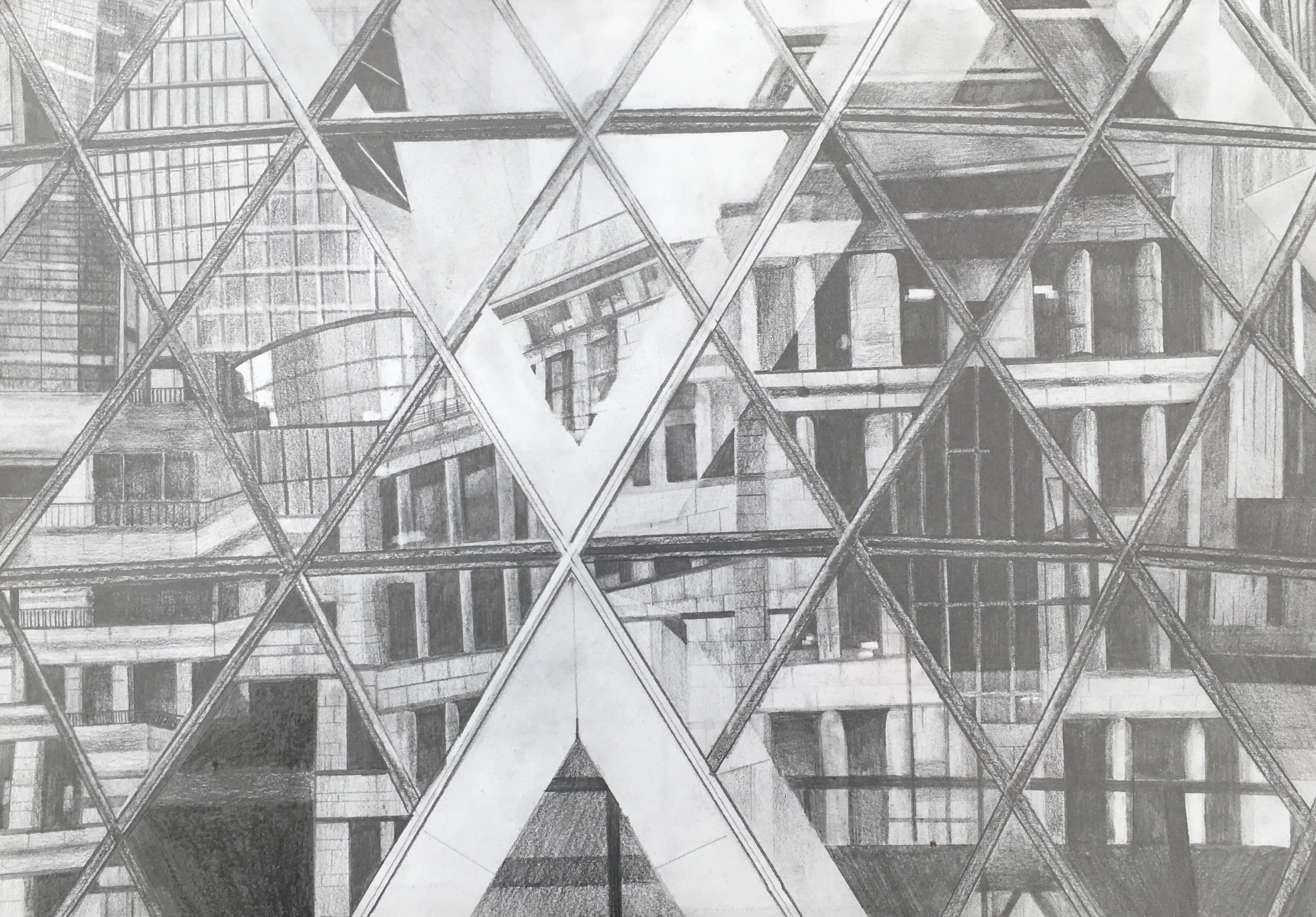
Maisy Ekins-Malcolm
Trevelyan College
Reflections (2021)
Graphite on paper
‘Light, defined as “the natural agent that stimulates sight and makes things visible," plays a vital role in shaping our perception of the world. This interplay of light is strikingly evident in the reflections cast on the external surfaces of 30 St Mary Axe, affectionately known as The Gherkin. These reflections highlight a fascinating duality within the City of London, where modern skyscrapers stand in stark contrast to historic stone buildings, creating a visual dialogue between past and present.
The glass façade of The Gherkin not only mirrors the city’s architectural evolution but also symbolizes how history and modernity coexist, intertwining to shape the fabric of urban life. This interplay invites us to consider how the past continues to ground and inspire the present, influencing the way society is constructed and developed in the 21st century.
Light becomes more than a physical phenomenon; it is a metaphorical bridge that connects eras, emphasizing continuity amidst change. Through its reflections, The Gherkin serves as a lens through which we can view London as a city forever balancing heritage and innovation.’
“ There is a crack in everything, that’s how the light gets in.”
– Leonard Cohen

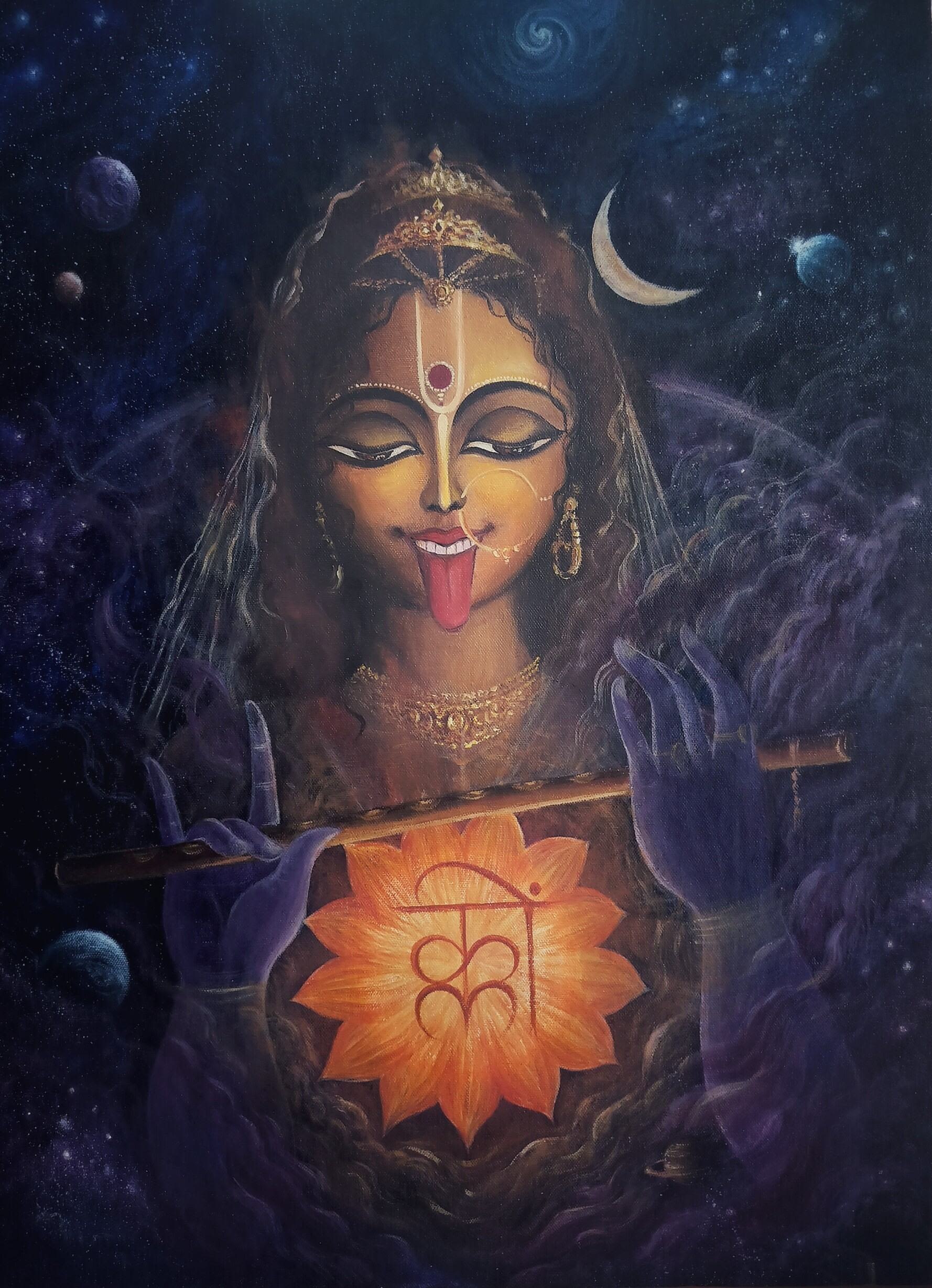
Shamayita Chatterjee
St. Mary’s College
The Light Within (2024)
Oil and acrylic on canvas
‘On hot summer nights, my mother would tell me stories of gods and goddesses who became one, birthing a beam of light from which the universe sprang. “Light always prevails over darkness,” she’d say. But when she was diagnosed with stage 4 cancer, I found myself praying to those very gods as the light of my life faded, day by day.
One night, from her hospital bed, she asked me for a painting. Something to restore her faith, as pain eroded not just her body, but her beliefs. It was then that I realized light and darkness are not enemies, but partners in creation. Without one, the other cannot exist.
This painting embodies that truth. The fierce goddess of death (Kali) and the compassionate god of life (Krishna) unite, their energies merging to birth the first beams of universal light.
The lotus at the heart glows with the sacred fire of existence; a light that resides within my mother, within me, within all of us. Even in the face of inevitable death, that divine flame never truly dies. Because light is not the absence of darkness. It is what is born from it.’

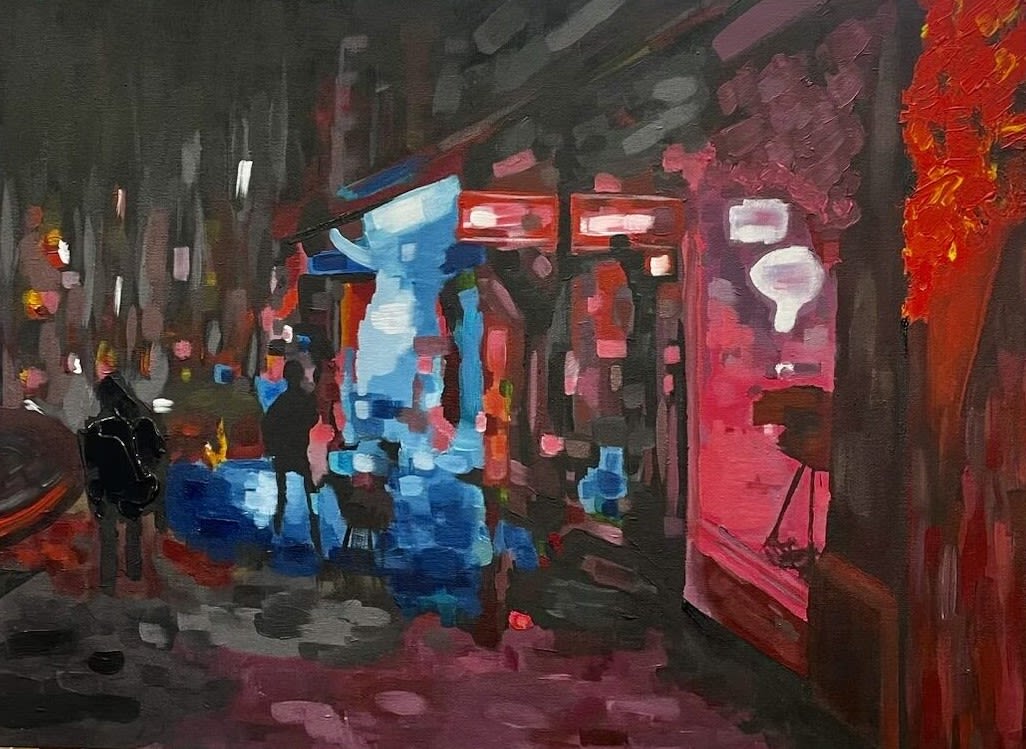
Torin McGregor
Collingwood College
The Waverly Bend (2025)
Acrylic on canvas covered board
‘This artwork applies the theme of light to my home and my memory. The Waverly Bend depicts the lights pushing out of the pubs that populate Edinburgh's Cockburn Street. It’s where I learned to drink, nights spent with drunken friends, the promise of tomorrow seemed endless and the moment was right there. This painting for me is simply a memory; an over-romanticisation of teenage thought. All that mattered to me back then was what I saw and how I felt.
The main source of light comes from the buildings where life was formed, each colour a different souvenir. The people and road are simply shadows because the memory is all feeling. The buildings cannot be accurate because memory is ever changing and although the bars are gone or changed, the light and colour of my thoughts is immortalised on my street.’
Lucy Denton
Collingwood College
Reflections on the Tyne (2024)
Acrylic paint, Brusho and coloured pencil
‘My piece, Reflections on the Tyne, combines a background inspired by the nocturnes of James Whistler, combined with a detailed drawing of Newcastle’s High Level Bridge. The painting is inspired by a photo taken during a night shoot.
Through the depiction of the bridge and the reflection of the lights, I have tried to capture the union between the industrial grit of Newcastle, and the beauty of the night-time city. I believe the way the light dances on the surface of the water is a unique interpretation of ‘light’.
I used Brusho, a highly pigmented powder paint, as well as acrylic paint, to define certain lights in the skyline. By using a white pencil crayon to draw on top of the background, I was able to accentuate the urban structure of the bridge and bring the two separate elements of the composition together.’

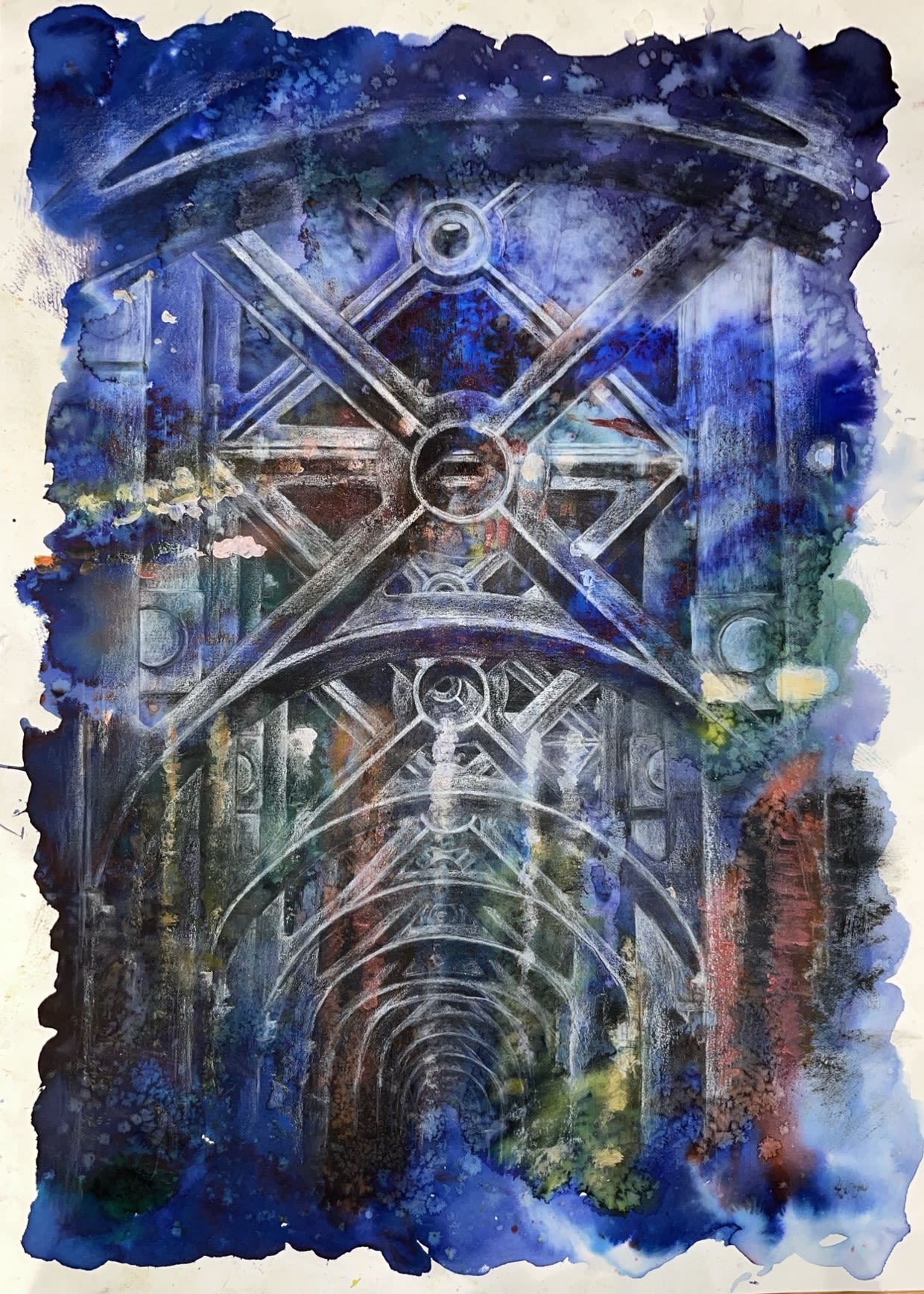
Lucy Denton
Collingwood College
Reflections on the Tyne (2024)
Acrylic paint, Brusho and coloured pencil
‘My piece, Reflections on the Tyne, combines a background inspired by the nocturnes of James Whistler, combined with a detailed drawing of Newcastle’s High Level Bridge. The painting is inspired by a photo taken during a night shoot.
Through the depiction of the bridge and the reflection of the lights, I have tried to capture the union between the industrial grit of Newcastle, and the beauty of the night-time city. I believe the way the light dances on the surface of the water is a unique interpretation of ‘light’.
I used Brusho, a highly pigmented powder paint, as well as acrylic paint, to define certain lights in the skyline. By using a white pencil crayon to draw on top of the background, I was able to accentuate the urban structure of the bridge and bring the two separate elements of the composition together.’

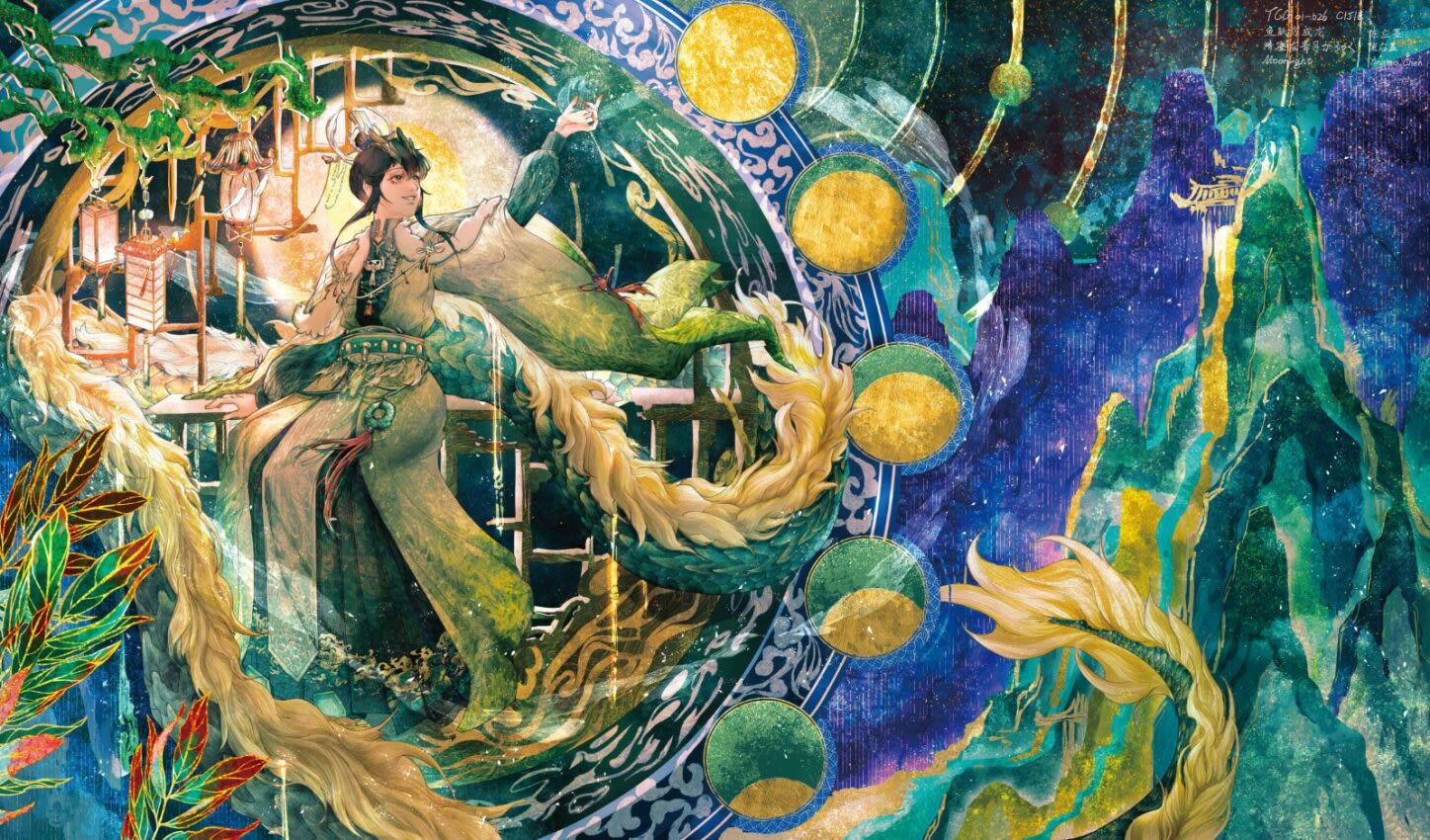

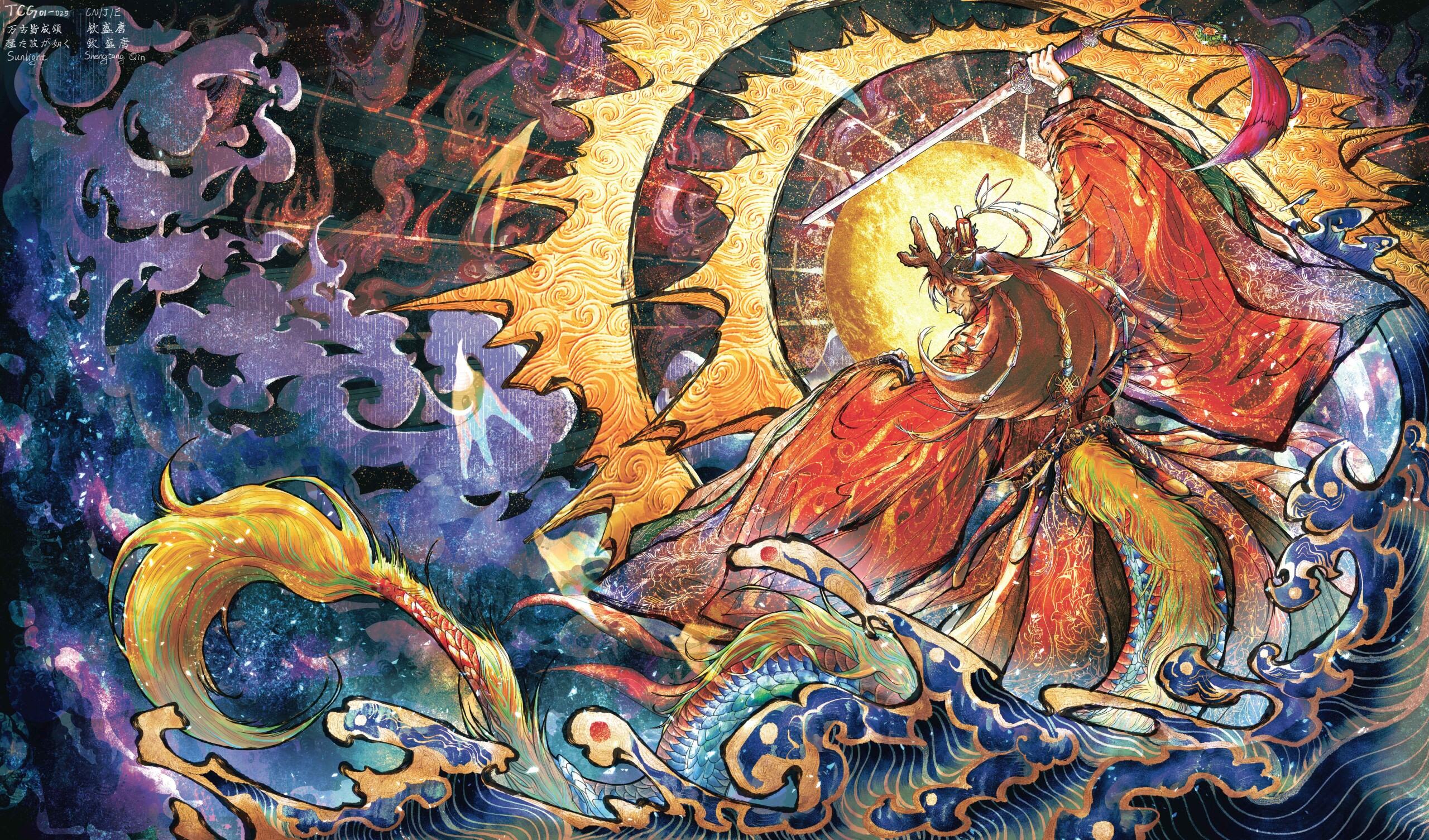
Hongyi Chen
St Cuthberts Society
Moonlight·Sunlight (2025)
Digital artwork
‘Moonlight depicts my original character, Yingmo Chen, leaning against a traditional Chinese shelf while gazing up at the moonlight. This digital artwork uses mainly cold colours to convey the tranquillity of the moonlight, while warm-toned lanterns in the upper left corner highlight the character. The composition comprises various Chinese elements; bronze lanterns, bogu shelf, traditional Chinese wave and cloud patterns, blue and white porcelain, the phases of the moon, mountains, waterfalls, and astronomical symbols.
Sunlight features another character, Shengtang Qin. This work depicts a more intense motion and a more dynamic scene. Shengtang is sword dancing, an ancient Chinese martial art, within an ocean. He breaks through the waves toward the rising sun.
This artwork uses warm and vibrant colour, balanced with cooler shades of blue and purple in the non-primary areas. Key elements include ocean waves, flames, flying birds, cloud motifs, and Sunlight.
Both Moonlight and Sunlight contain elements of the Loong (Chinese dragon), symbolizing happiness and prosperity in Chinese culture.’




 Built with Shorthand