
C O M P E L L E D
Student Art Prize 2024/25


Compelled:
Having to do something, because you are forced to or feel it is necessary
Force or oblige
This theme delves into the complex tension between illumination and constraint, where light is not a natural element, but something imposed, manipulated, or controlled. Forced light is light obtained or imposed through coercion, and often produced with effort, creating an unnatural or affected force. It’s light that breaks open spaces and perceptions, making its way through resistance and struggle. The works here challenge the boundaries of visibility, exploring how light shapes our understanding of truth, identity, and power. From change of habitat to themes of police brutality and uncertainty, these pieces force the viewer to confront the interplay between light, darkness, and societal forces. The artists examine the complexities of light’s role in shaping our world, revealing its capacity to both illuminate and constrain.

Callista Partsafas
St. Cuthbert’s Society
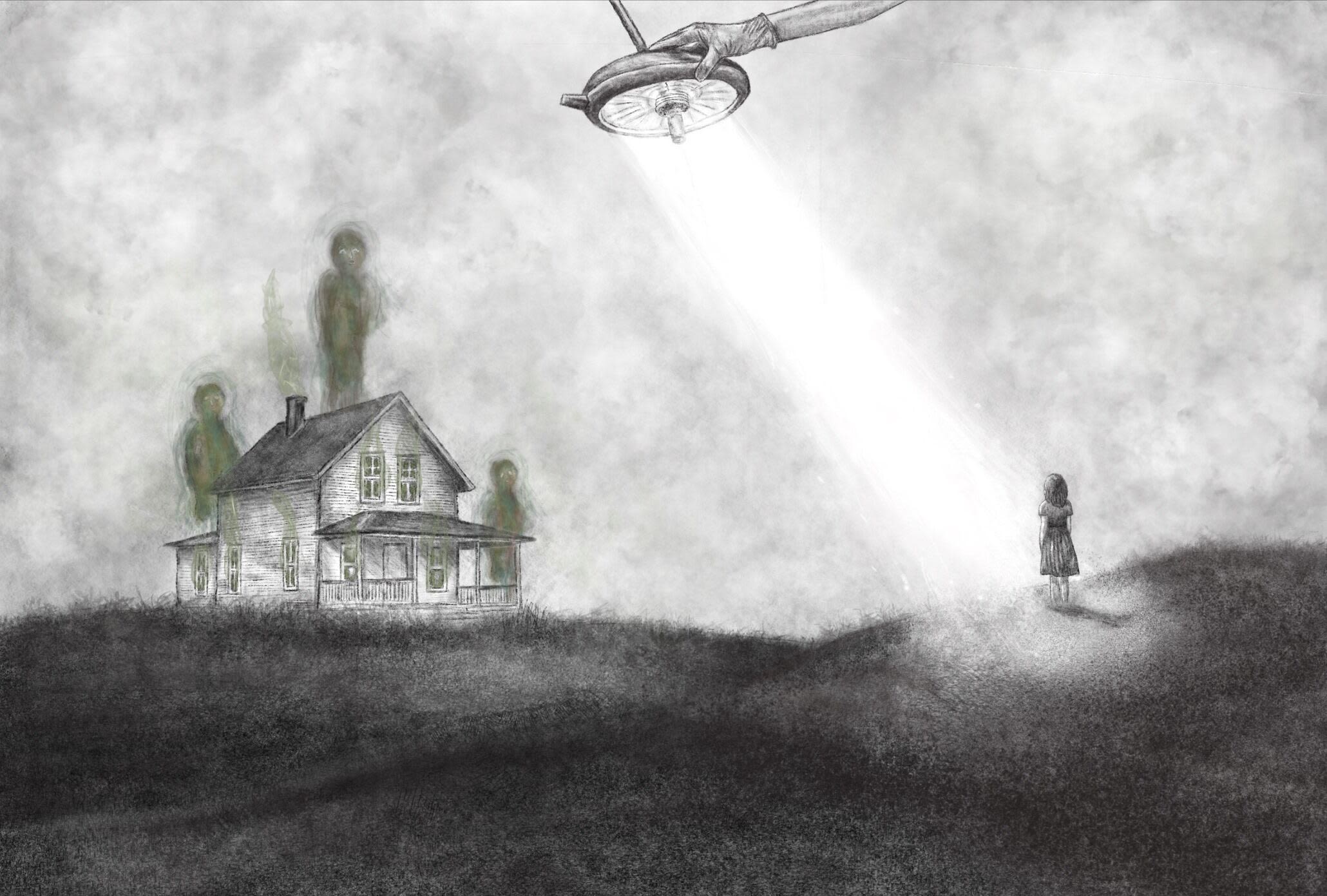
Leo’s House (2025)
Digital
'When I was young, my brother passed away. Many childhood afternoons unfolded in the sterile halls of a children’s hospital, where bright overhead lights cast our family’s reality into sharp relief. In a small Midwestern town, word travels fast. After his passing, school felt like standing beneath an unrelenting spotlight, with classmates looking, whispering, knowing.
Even now, when the light catches just right, I find myself looking back at the house where I grew up, a place that still holds so much of me. I picture my old home, heavy with that time. My artwork captures this: a hospital light shining down as I stare at that house, confronting the weight of its memories, still wrapped in something I had yet to understand as a child. Most recollections of that house and town are warm. But as time passes, the harder moments grow hazy. I used to fear that, as if forgetting might erase what once felt unforgettable.
Creating this piece was healing. It had been a long time since I let myself truly look back. And though it isn’t a happy memory, I’ve found a quiet gratitude in the way light, unexpected and unbidden, brings him back to me.'

Li-Lin Lu
St. John’s College
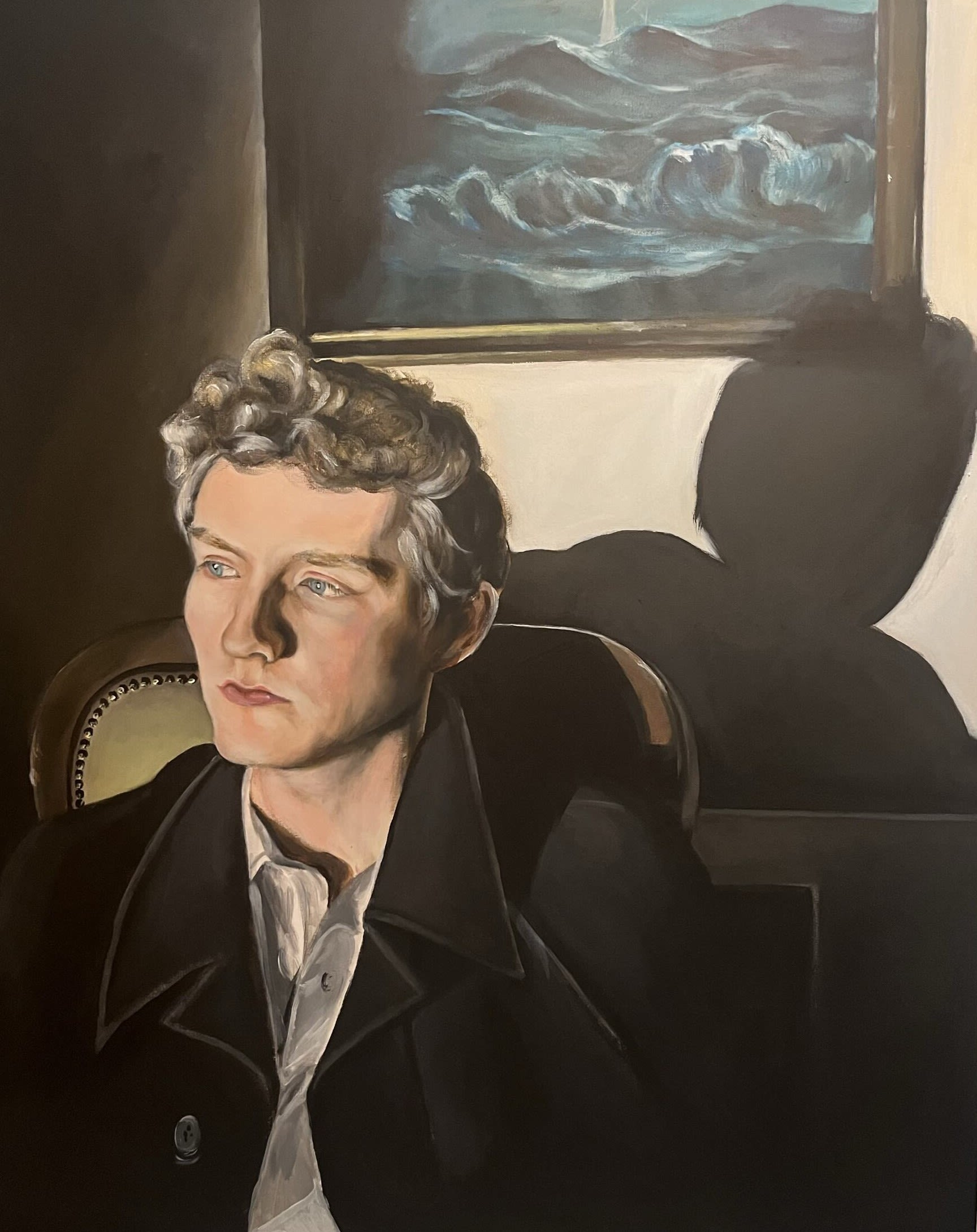
In light I see you better, but I can also see your shadow. (2025)
Acrylics on Canvas.
'My favourite theme has always been portraits and the stories they tell through expressions, postures, background settings and outfits. There are a few reasons I submitted to this prize. I’ve always been an impatient painter, but for the Durham University Student Art Prize I finally managed to complete my first finished artwork. Also, I wanted my housemate’s face displayed in the Palatine Centre. I’m glad I succeeded in both.'

Allegra Miller
St. Cuthbert’s Society
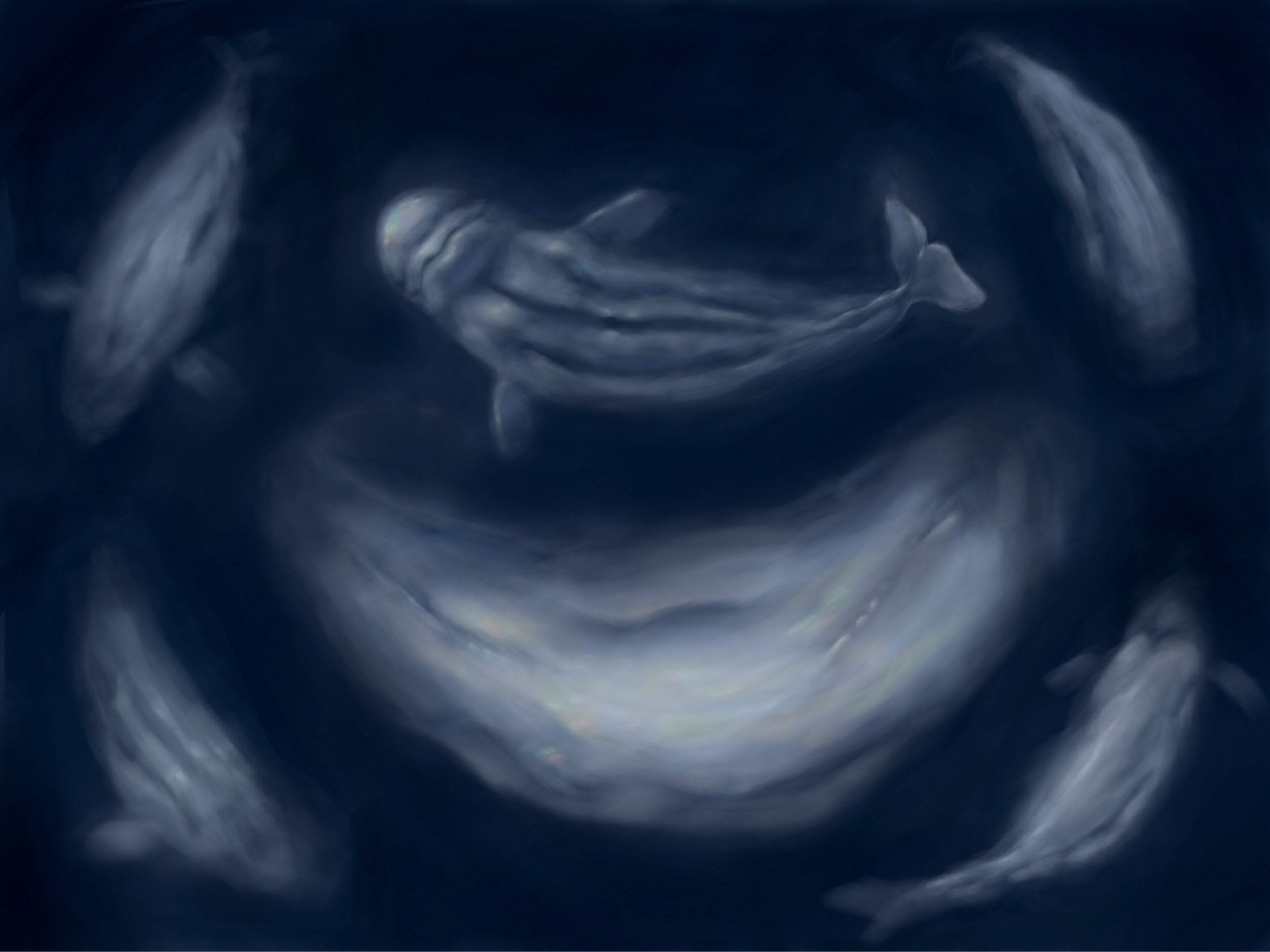
The Deep (2024)
Digital Painting
'Beluga whales are a symbol of hope, and a rare conservation success. One of those species brought out from the long shadow of the current mass extinction event (though an Alaskan population remains Critically Endangered). For me, they have a more symbolic significance, too. It can feel hard to keep going, sometimes, amidst the darkness and strife of the world, or which we find within our own minds. I wanted to create a sense of peace, of respite – for something soft, dreamy, to emerge from the rough, jagged holes we fall into. The belugas are slightly blurred, indistinct, as they emerge from the dark. Slightly iridescent, like the rainbows cast by stained glass on a childhood wall. Like dreams, or the blurry figures which can come only from the imagination – when our minds are a place of safety, of comfort, rather than fear. Even if just for a moment, there is safety, and there is light. And the whales swim on.'
“ Light is the most important person in the picture.”
-Claude Monet

Matilda Knowles
The College of St Hild and St Bede
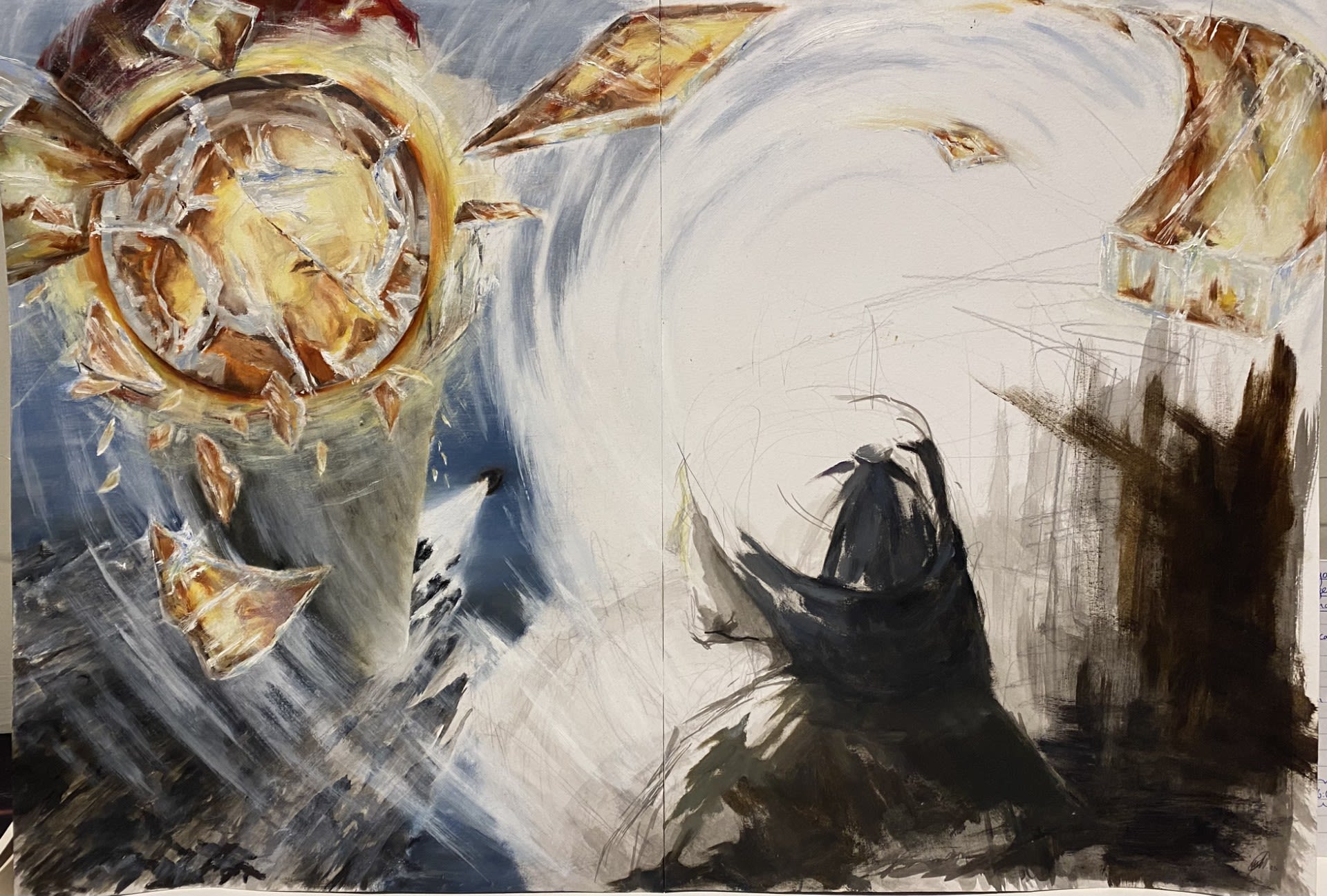
The wrong light can be blinding (2025)
Oil and ink on paper
'In this piece I have explored the struggle of not knowing which path to follow, and whether the path that you are on is the right one. In this case, the fisherman is following the light of his boat, but unbeknown to him there is a far more important light that he should be paying attention to. I have felt this very strongly since coming to university. Much like the fisherman whose very bright light is blinding him from what he needs to see, I often wonder if choosing university is blinding me to a more important light. Producing this painting has allowed me to explore this other path, as for me art is the constant flickering light in the distance that never goes off, but that I never seem to be able to reach. I am still trying to find a way to bask in the light of both, but thankfully my blindness to one or the other will not be so fatal as for the poor fisherman. This painting illustrates the question many of us have towards the end of our life: Should we have followed the other light?'

Lucy Marisa Lan Skrine
St Mary’s College
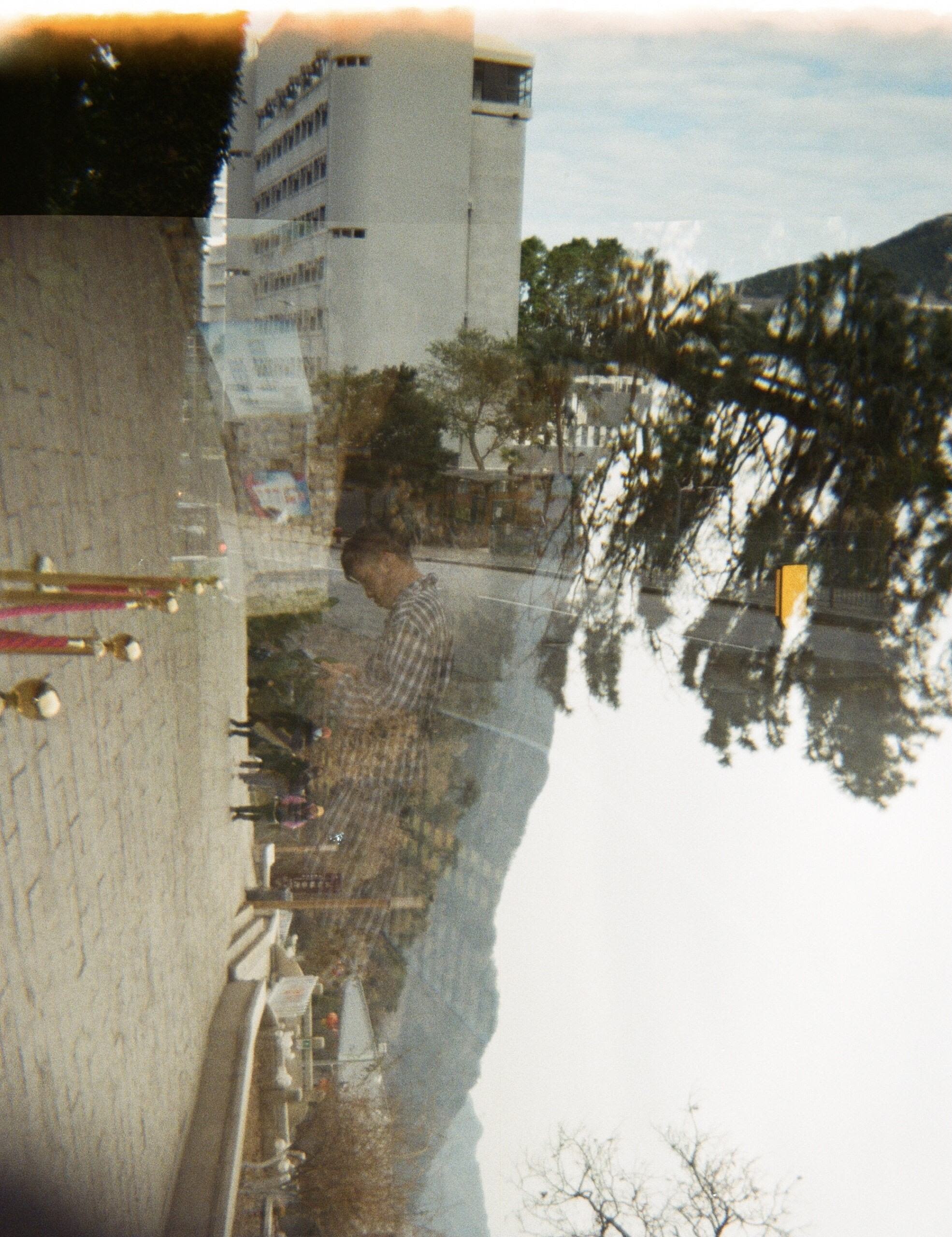
Man in Uniform (2023)
Film photography
'This photo responds to the theme of “Light”. It depicts a man in a hospital uniform, undergoing treatment at the psychiatric unit of Pamela Youde Nethersole Eastern Hospital in Hong Kong (where I spent 7 days in 2023). He is permitted to leave the unit once a day, to access light. In Social Situations and the Self, Erving Goffman explores “total institutions” like psychiatric hospitals, where patients lose their personal identity, and conform to the role of “the patient”. This is achieved through rigid regimentation (including “trimming” and “programming”), whereby a patient has their hair cut, is given a uniform and is introduced to the institution's rules - leading to a monotonous existence. Goffman’s work forces us to consider alternative forms of treatment, which might be more humane. The deprivation of light in this photo serves as a metaphor for how psychiatric patients are stripped of autonomy and basic dignities. By contrast, the double exposure presents the Great Wall of China as its background. The wall, one of China’s greatest sights, is vast and expansive, offering visitors the simple privilege of free access to light. Roaming freely along the wall is the direct antithesis of being confined in a psychiatric ward.'
Lucy Marisa Lan Skrine
St Mary’s College
Man in Uniform (2023)
Film photography
'This photo responds to the theme of “Light”. It depicts a man in a hospital uniform, undergoing treatment at the psychiatric unit of Pamela Youde Nethersole Eastern Hospital in Hong Kong (where I spent 7 days in 2023). He is permitted to leave the unit once a day, to access light. In Social Situations and the Self, Erving Goffman explores “total institutions” like psychiatric hospitals, where patients lose their personal identity, and conform to the role of “the patient”. This is achieved through rigid regimentation (including “trimming” and “programming”), whereby a patient has their hair cut, is given a uniform and is introduced to the institution's rules - leading to a monotonous existence. Goffman’s work forces us to consider alternative forms of treatment, which might be more humane. The deprivation of light in this photo serves as a metaphor for how psychiatric patients are stripped of autonomy and basic dignities. By contrast, the double exposure presents the Great Wall of China as its background. The wall, one of China’s greatest sights, is vast and expansive, offering visitors the simple privilege of free access to light. Roaming freely along the wall is the direct antithesis of being confined in a psychiatric ward.'

Jeorgia Pye-Smith
The College of St Hild and St Bede
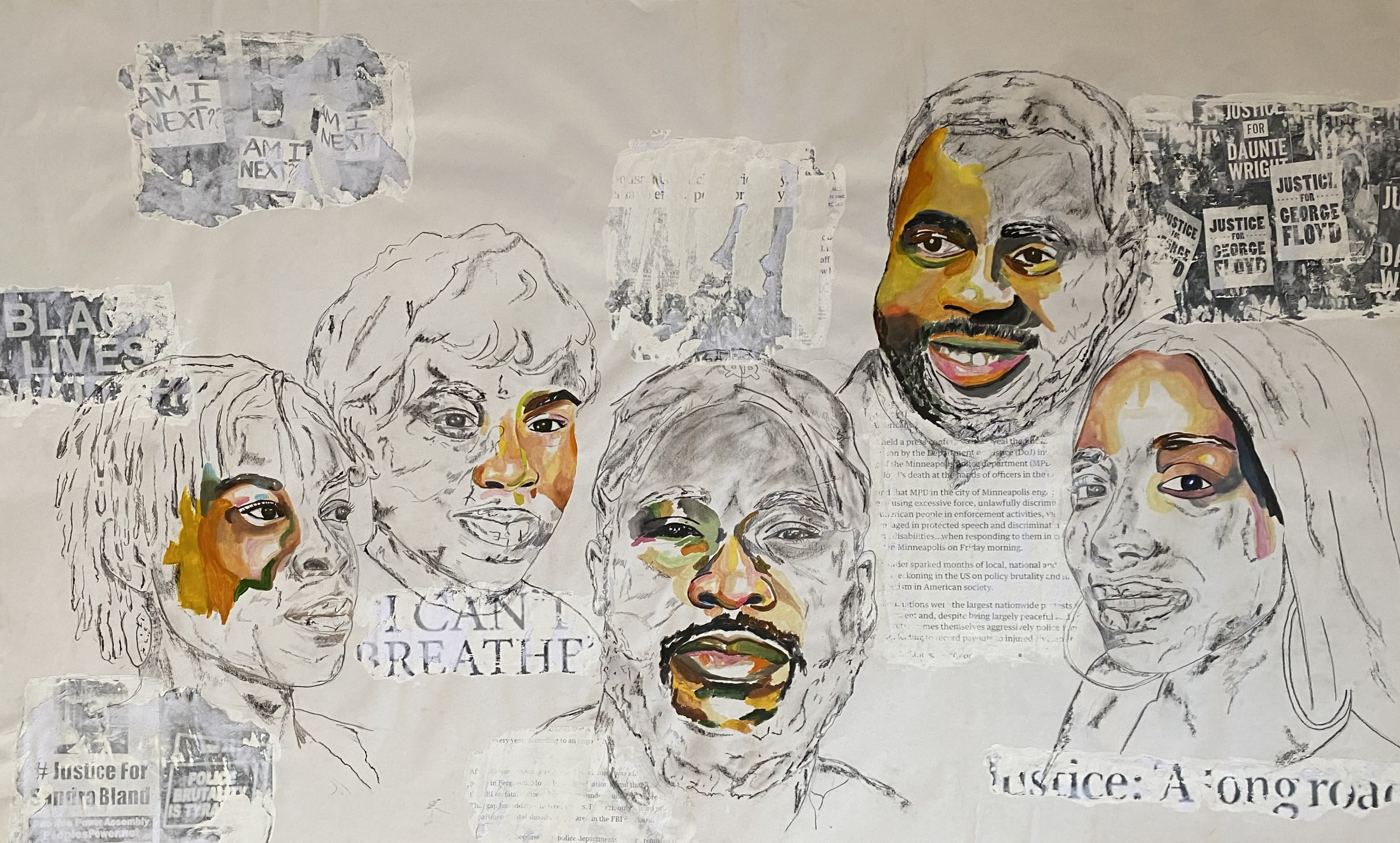
Incomplete (2024)
Graphite and watercolour on paper
'The Black Lives Matter movement shone a radiant light on the tragic deaths of innocent people, most famously George Floyd. However, many names of other victims have remained in the shadows, unknown outside their grieving communities.
My artwork, ‘Incomplete’, aims to shed light on people whose deaths received less media coverage, or coverage that didn’t reach as far as the UK, making them unknown to the greater world. It pays tribute to five souls—three women and two men—each whose lights were extinguished too soon. Before delving into the theme of racial inequality further, these people were unknown to me.
Inspired by Brooklyn artist Adrian Brandon, I used time as a medium, in which I sketched the portraits using graphite, before painting them for 1 minute per year they were alive. The outcome is haunting: incomplete faces, fading into emptiness, reflecting the light that was taken from them. Their faces, like their stories, were left unfinished.
Through ‘Incomplete’, the viewer is encouraged to consider why some names are illuminated in memory, while others have been confined to the darkness. I aim to bring light to the stories of these people, encouraging those of other victims to be remembered also.'




 Built with Shorthand