
V O I D
Student Art Prize 2024/25


Void:
Not valid
Completely empty
To drain away
This theme invites artists to explore the concept of emptiness, absence, and the infinite possibilities within the unknown. The works presented explore the psychological, physical, and existential dimensions of the void, challenging perceptions of space and presence.
Each piece reflects the artist’s unique interpretation of nothingness, offering an opportunity to engage with what is unseen, unsaid, or undefined. Abandoned familial homes, passing of moments, decaying identities. Through this collection, we invite you to reflect on the power and mystery of the void in both art and life.

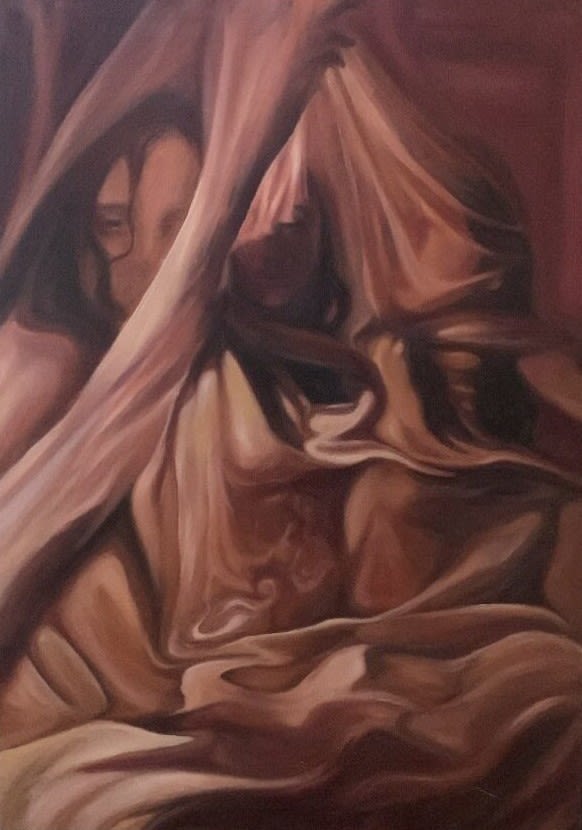
Sophia Hand
St. Aidan’s College
Inner-Self Portrait (2023)
Oil on canvas
'This piece represents my very first journey into abstract art, or rather non-realism. I chose to embark upon this journey in an effort of self-reflection, and to bring to light my own reservations against more conceptual fine art. This process allowed for unfiltered expression, unconfined by the mission of achieving a likeness. This piece was forged through images taken of myself, cut and collaged together. It expresses an action of sheltering oneself, or their many selves, from light that filters in through gauzy folds of fabric. I was particularly fascinated by the concept of a simultaneous sense of the sensual and the grotesque; many strive to conceal both such aspects of their being. Yet, as this work posits, the concealment of such shameful things cannot be done, mirroring my own struggles of balancing self-expression and vulnerability. The red tones evoke a sense of danger and sensuality, of rawness, whilst the light that permeates the image prevents the three figures to retreat into shaded obscurity. The light in this painting highlights their interconnectedness as facets of my concept of self, and my own attempts to conceal them. This self-portrait exists as a snapshot of my own vulnerability, with the flash on.'
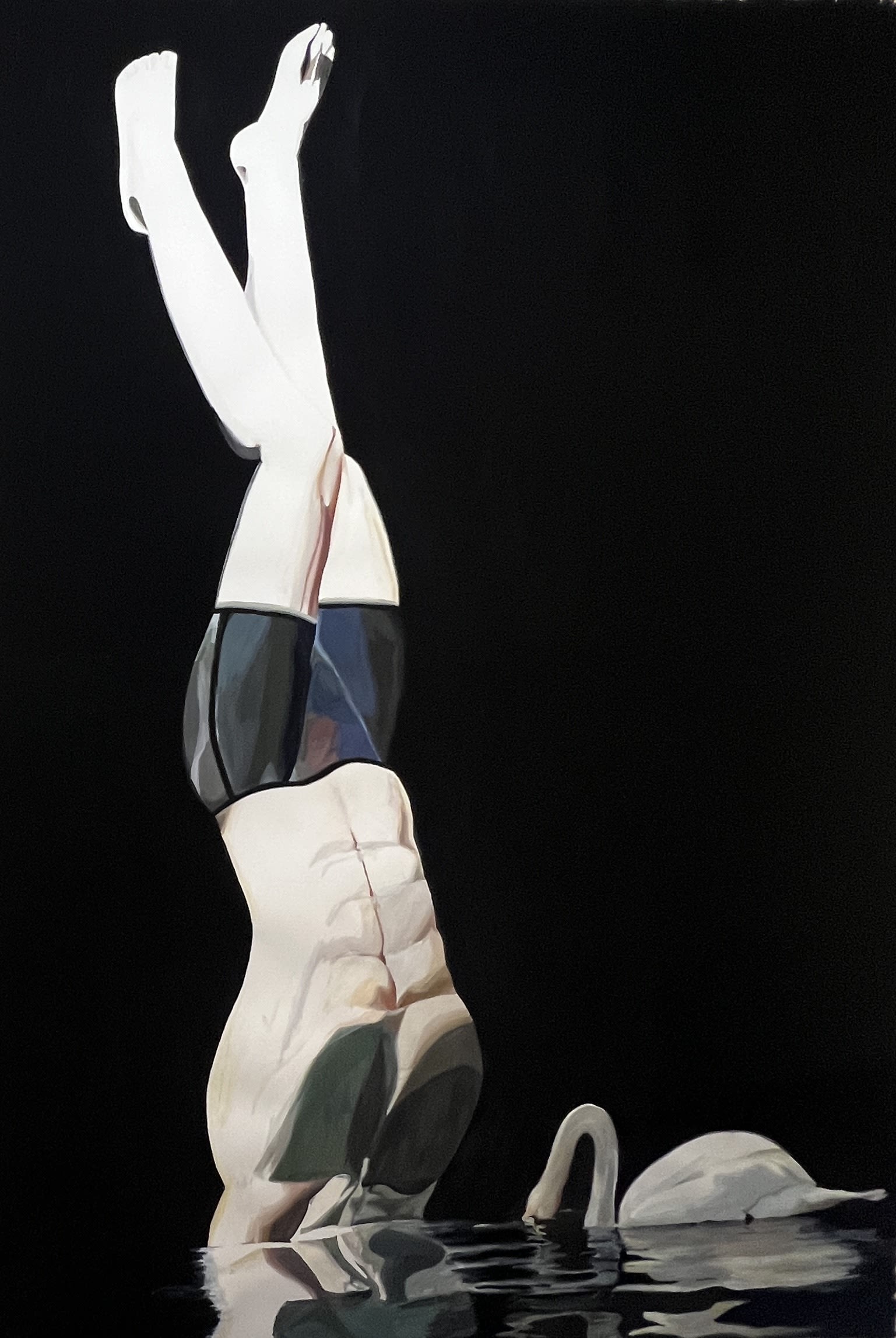
Rebecca Rowe
Josephine Butler College
Man and Swan Submerged In Water (2024)
Gouache on White Card

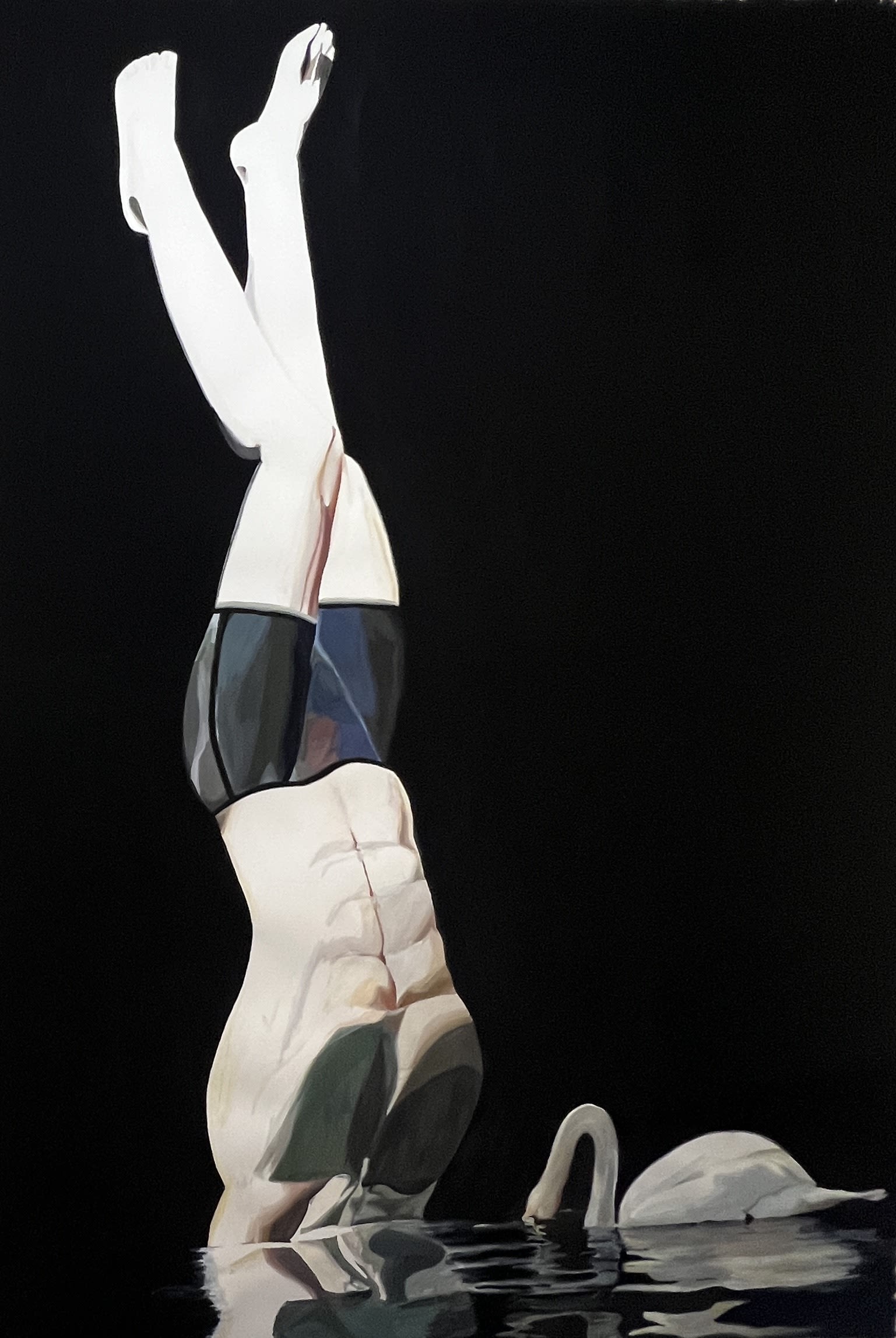
Rebecca Rowe
Josephine Butler College
Man and Swan Submerged In Water (2024)
Gouache on White Card
'While sitting on a bench at the flash, I noticed numerous times that swans submerged their necks for a while. How trusting, I thought, to assume that you are not in harm's way while you feed under the water. They don’t see light as they vanish into the murk and are blissfully unaware. It is not poetic; they’re likely just enjoying a soggy meal. But I couldn’t help but think about the melancholy of this.
I usually watch the swans when I walk quietly and alone when my life has become bleak and the dark thoughts about my life ruminate often. When I observe them, I think I’d rather dive, away from the light, than fall from the Sun.
It’s a simple choice. In life, we either work towards the light our life or we don’t. We fear what must come after we reach the end of our dive through the comfort of darkness that never stops. It’s hard to accept when people don’t see any light left for you and neither do you.'
“ In order for the light to shine so brightly, the darkness must be present.”
– Sir Francis Bacon

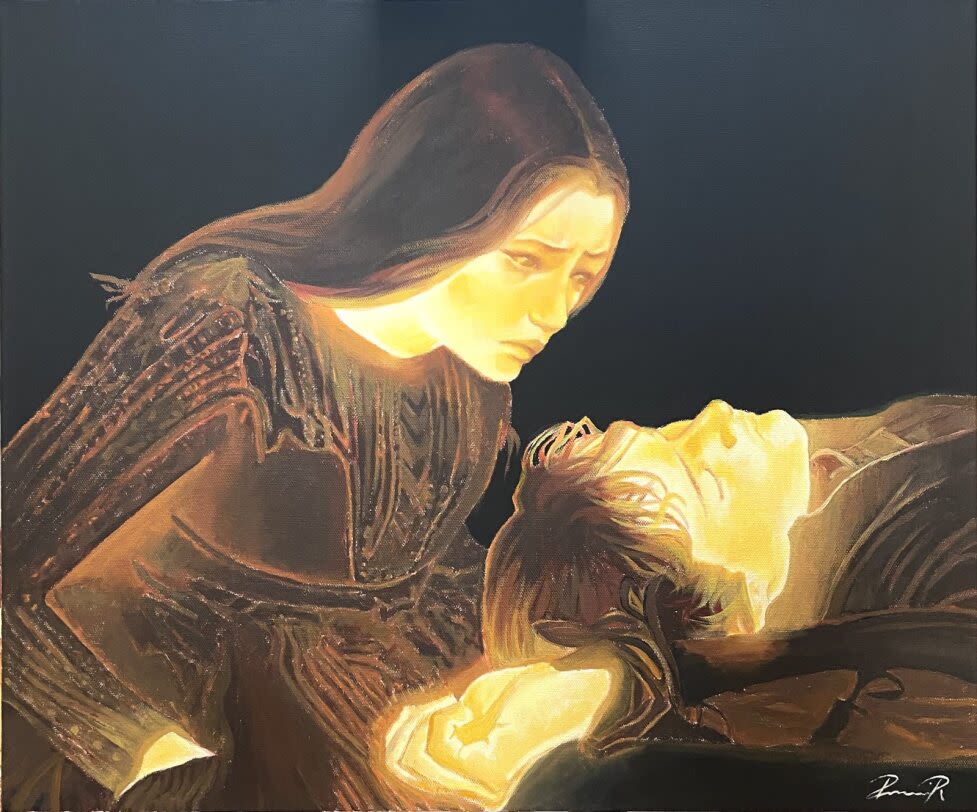
Imogen Clare Reeves
Grey College
A feasting presence full of light (2025)
Acrylic on canvas
'It all started with a dream I had of Olivia Hussey, one of my favourite 1960s actresses for as long as I can remember. Later that same week, I heard the terribly sad news of her passing. It was then, I knew immediately that my submission for the student art prize would have to be an homage to her, in some way. My dream of her seemed almost prophetic. The scene I have painted is taken from the 1968 film rendition of the tragedy of Romeo and Juliet in which Olivia Hussey played Juliet and Leonard Whiting played Romeo.
The specific moment that I have captured is taken from Act IV in which Juliet awakens from her pseudo-death to find her lover dead in her arms. This one powerful scene cleverly encapsulates multi-faceted interpretations of light, so I felt compelled to paint this scene. For instance, the brutal truth that Romeo is dead is only brought to light once it’s tragically too late. The title I have chosen for this painting is taken from Act V Scene III, when Romeo chances upon Juliet in her carefully orchestrated temporary coma and describes her death as:
“A grave? O, no. A lantern, slaughtered youth, For here lies Juliet, and her beauty makes This vault a feasting presence full of light.—”.
For my execution of this painting, I have been inspired by and in turn have adapted the technique and style of the Russian artist and photographer, Ivan Pokidyshev. Through mimicking of his painting methods, I have carefully altered the mood of this scene to draw focus to the light within the subject’s bodies. This glowing effect of light illuminating from within human bodies is characteristic of his art. I felt this artistic method was exceedingly fitting for the theme of light, in that it creates a visual illusion of physical light for the viewer. Moreover, this method emphasises the metaphor of how Romeo and Juliet were each other’s lights in their fictional world of darkness and conflict. This dynamic is captured in Act III:
“O, now begone. More light and light it grows.” – Juliet.
“More light and light, more dark and dark our woes.” – Romeo.'
Eli Lancaster
St Aidan’s College
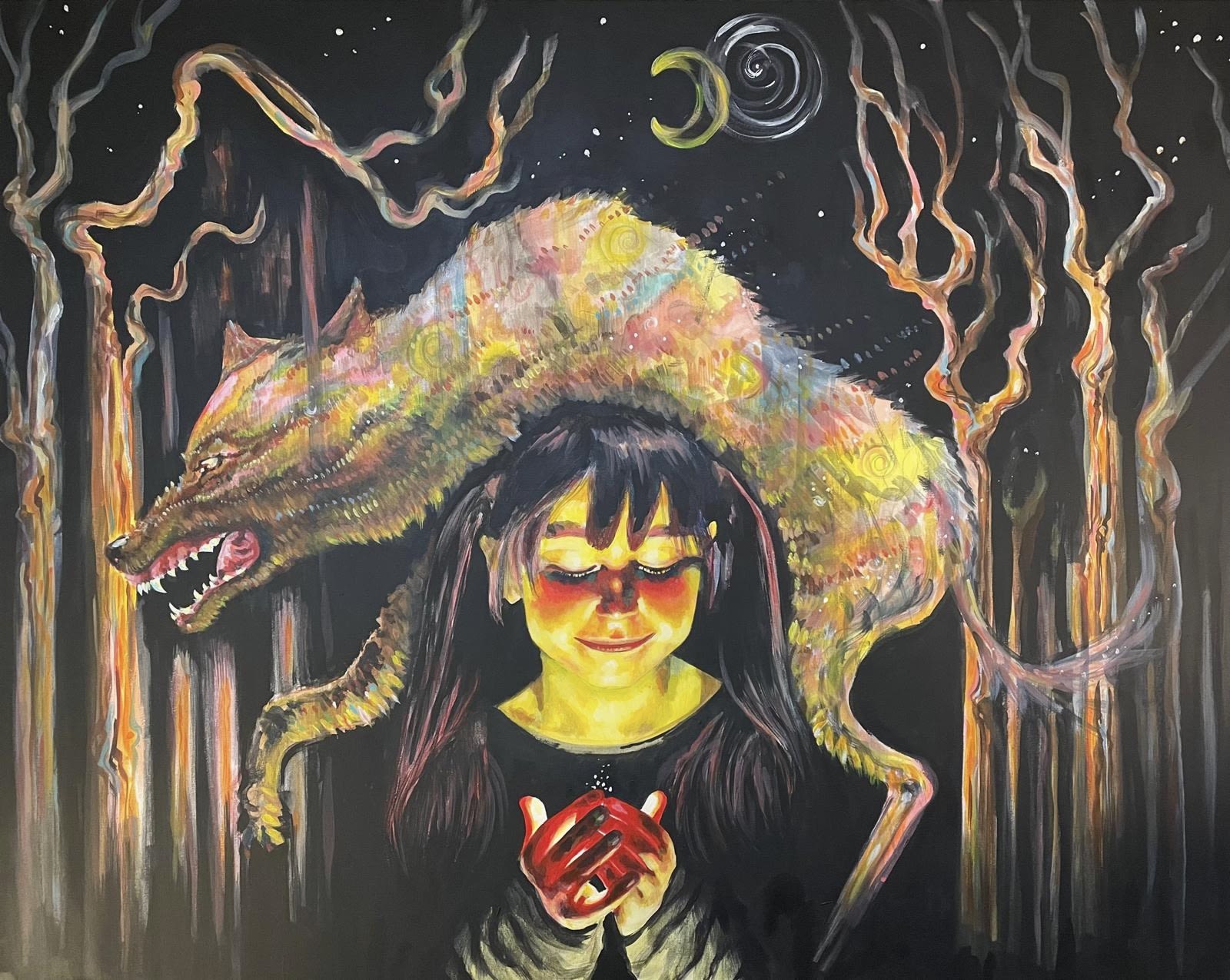
The Enlightenment (2025)
Acrylic on Canvas
'Light is typically a positive symbol – a dynamic instrument illuminating and brightening the world around us. As an autistic person, however, my sensory experiences can at times be panic inducing. The outside world can appear uncontrollably overwhelming and upsetting; and unintelligible mass within which I am paralysed.
My painting thus explores that how one chooses to perceive their surroundings can be altered and utilized. Though light impartially forces material to become visible, we still personally dictate how to interact with it and interpret it. Light makes vision possible, but becoming empowered and enlightened by our vision is a personal enterprise. In the painting, the child is grounded by their own personal light, which in turn uniquely and imaginatively recasts their surroundings. Her self-possession creates a light that overpowers the impartial lens of the distant sun and moon, transforming objects and localities which may be threatening or oppressive into something both more accessible and profound. This helps me remain settled within what can feel to be an inordinate world. We do not need to be overwhelmed and controlled by what we see; and one’s enlightenment is instigated by personal conception.'

Eli Lancaster
St Aidan’s College
The Enlightenment (2025)
Acrylic on Canvas
'Light is typically a positive symbol – a dynamic instrument illuminating and brightening the world around us. As an autistic person, however, my sensory experiences can at times be panic inducing. The outside world can appear uncontrollably overwhelming and upsetting; and unintelligible mass within which I am paralysed.
My painting thus explores that how one chooses to perceive their surroundings can be altered and utilized. Though light impartially forces material to become visible, we still personally dictate how to interact with it and interpret it. Light makes vision possible, but becoming empowered and enlightened by our vision is a personal enterprise. In the painting, the child is grounded by their own personal light, which in turn uniquely and imaginatively recasts their surroundings. Her self-possession creates a light that overpowers the impartial lens of the distant sun and moon, transforming objects and localities which may be threatening or oppressive into something both more accessible and profound. This helps me remain settled within what can feel to be an inordinate world. We do not need to be overwhelmed and controlled by what we see; and one’s enlightenment is instigated by personal conception.'


Catchik Paul Jordan
The College St. Hild and St. Bede
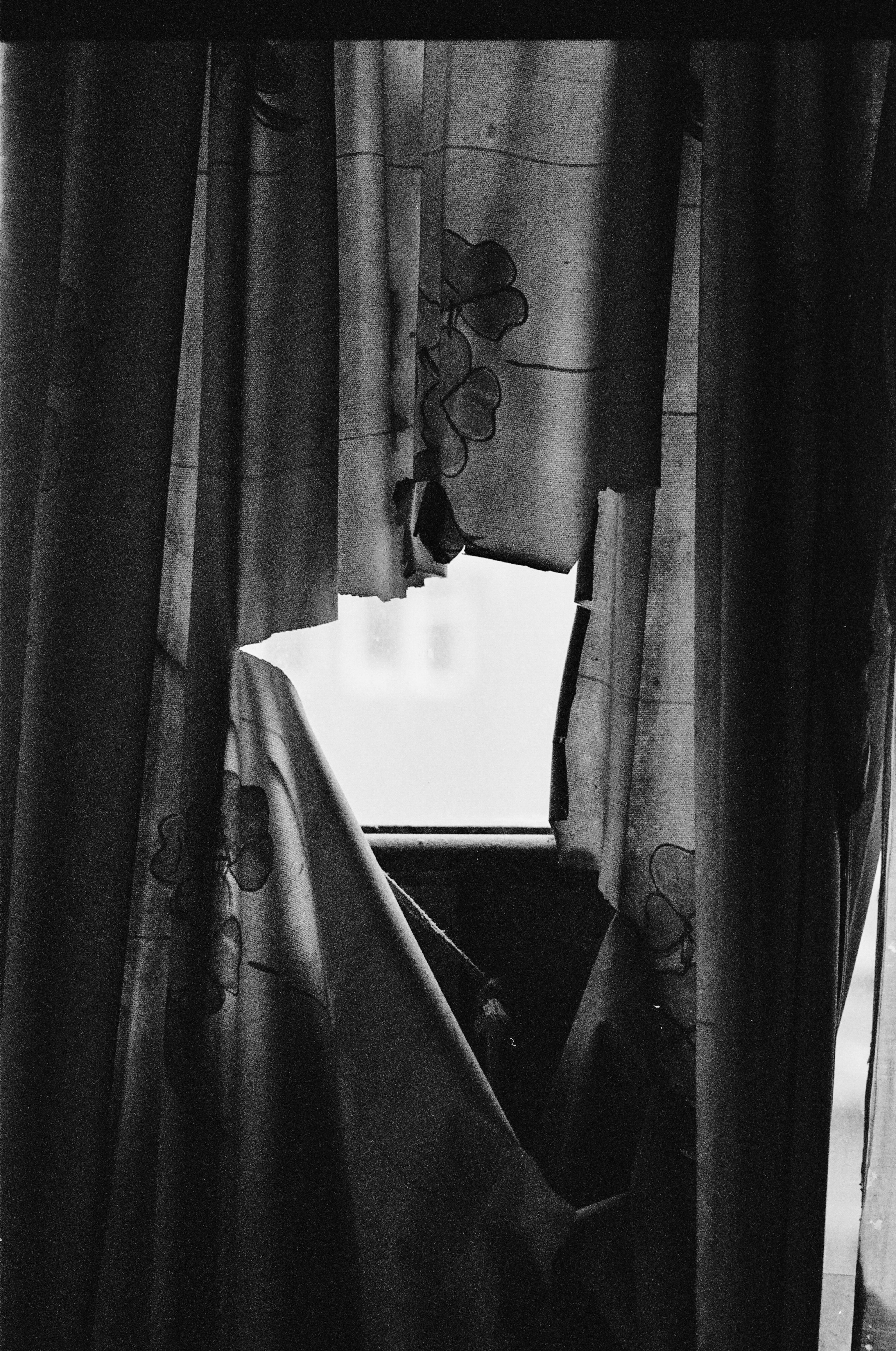
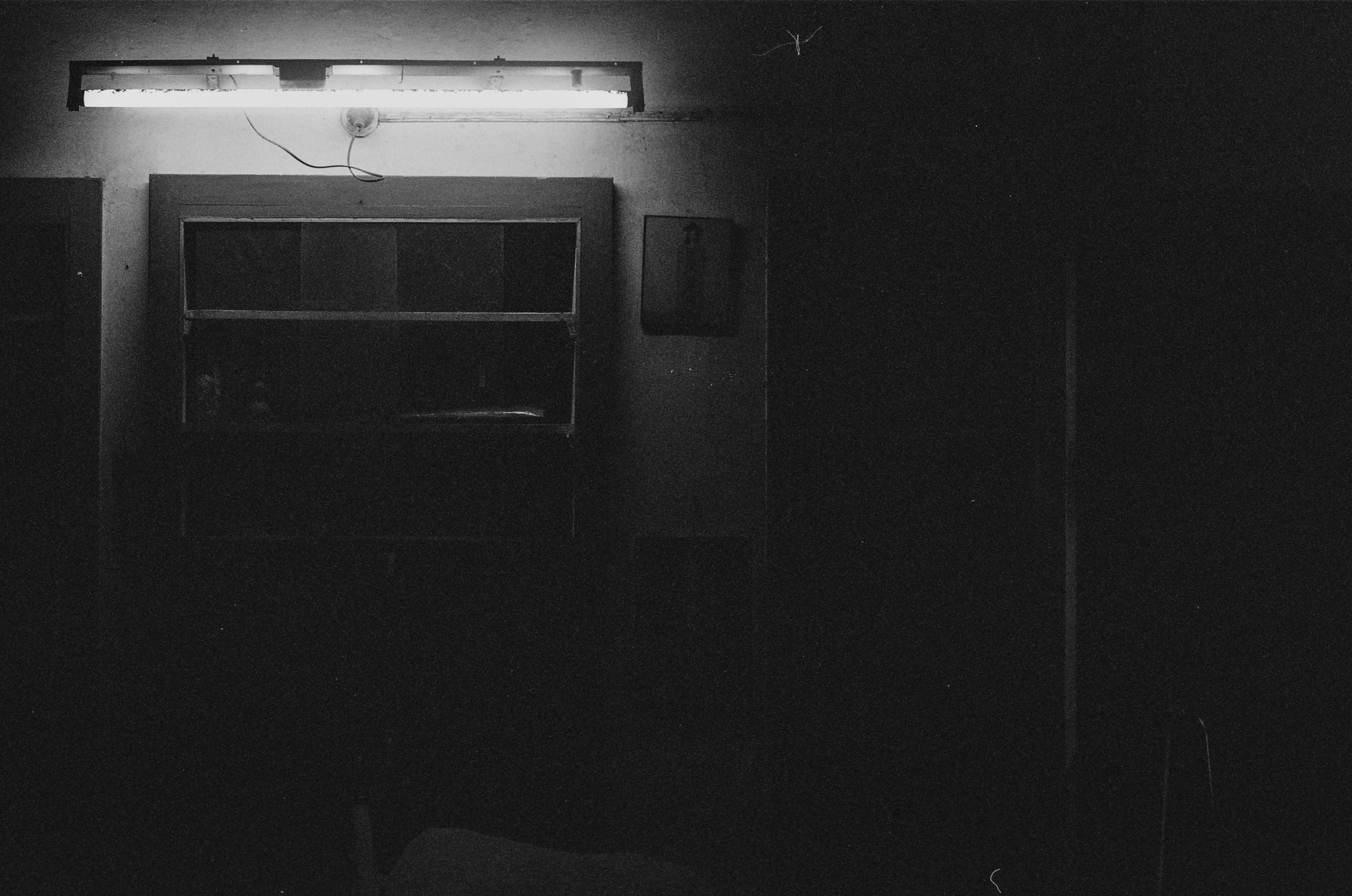
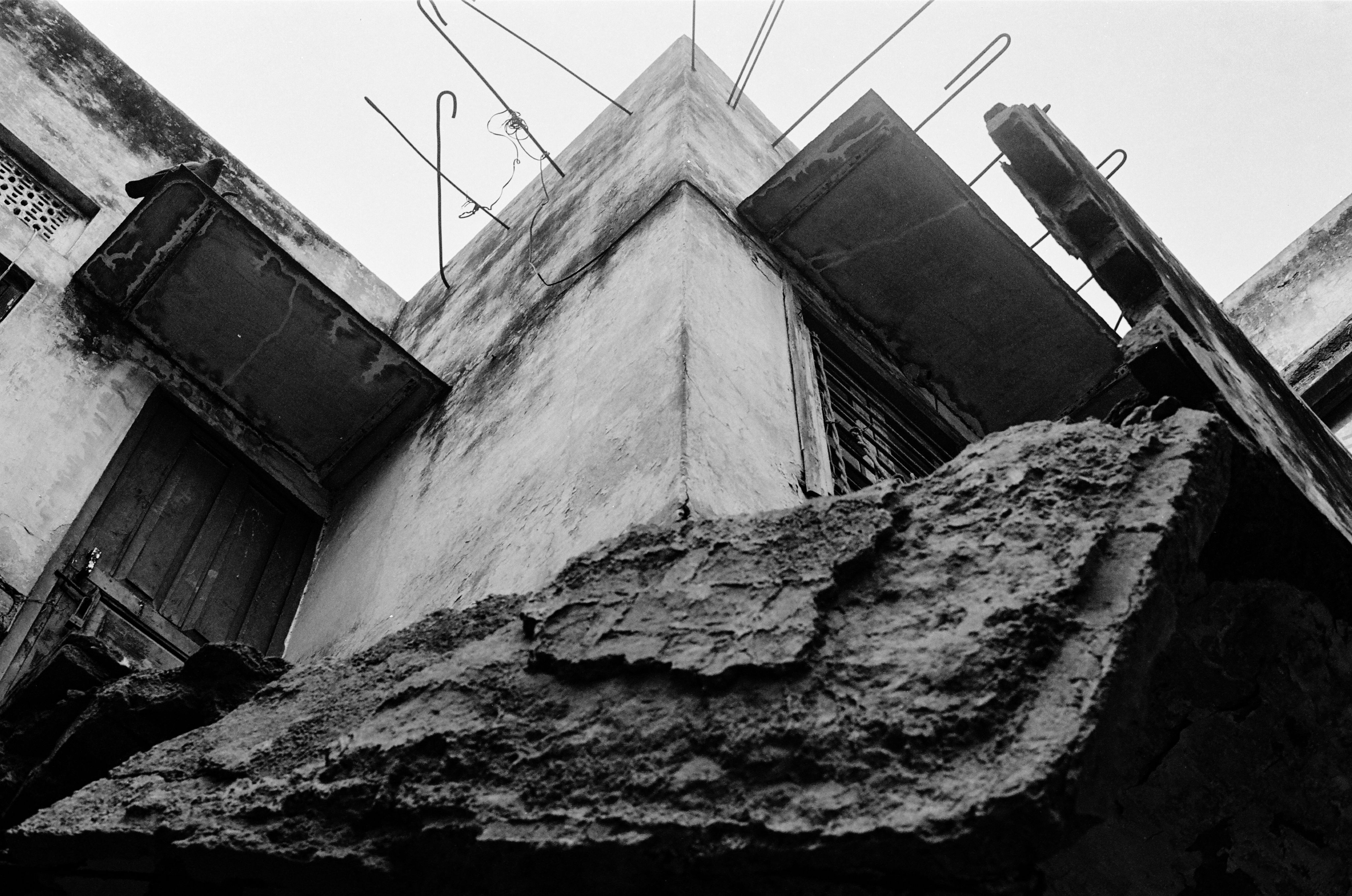
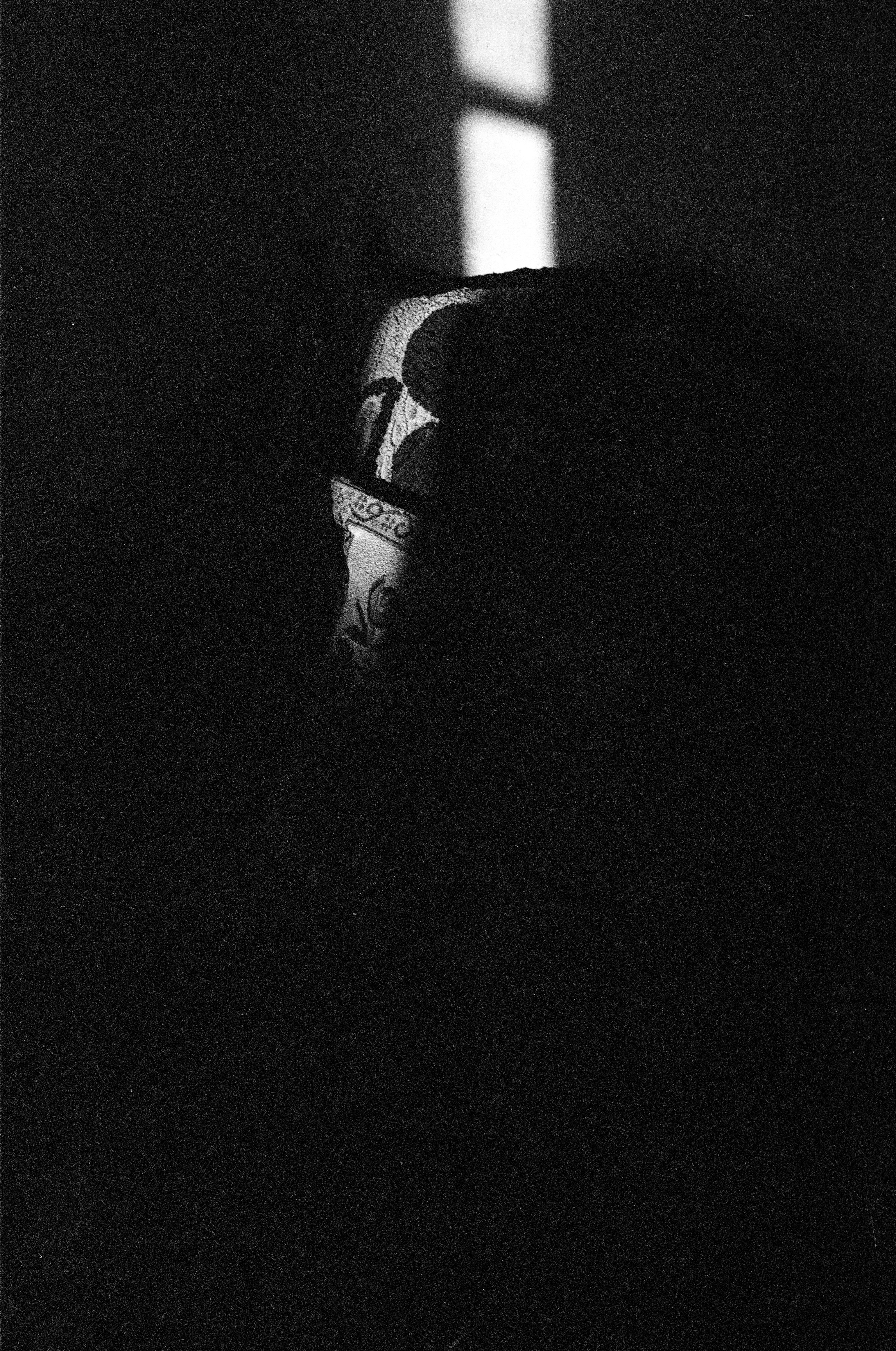
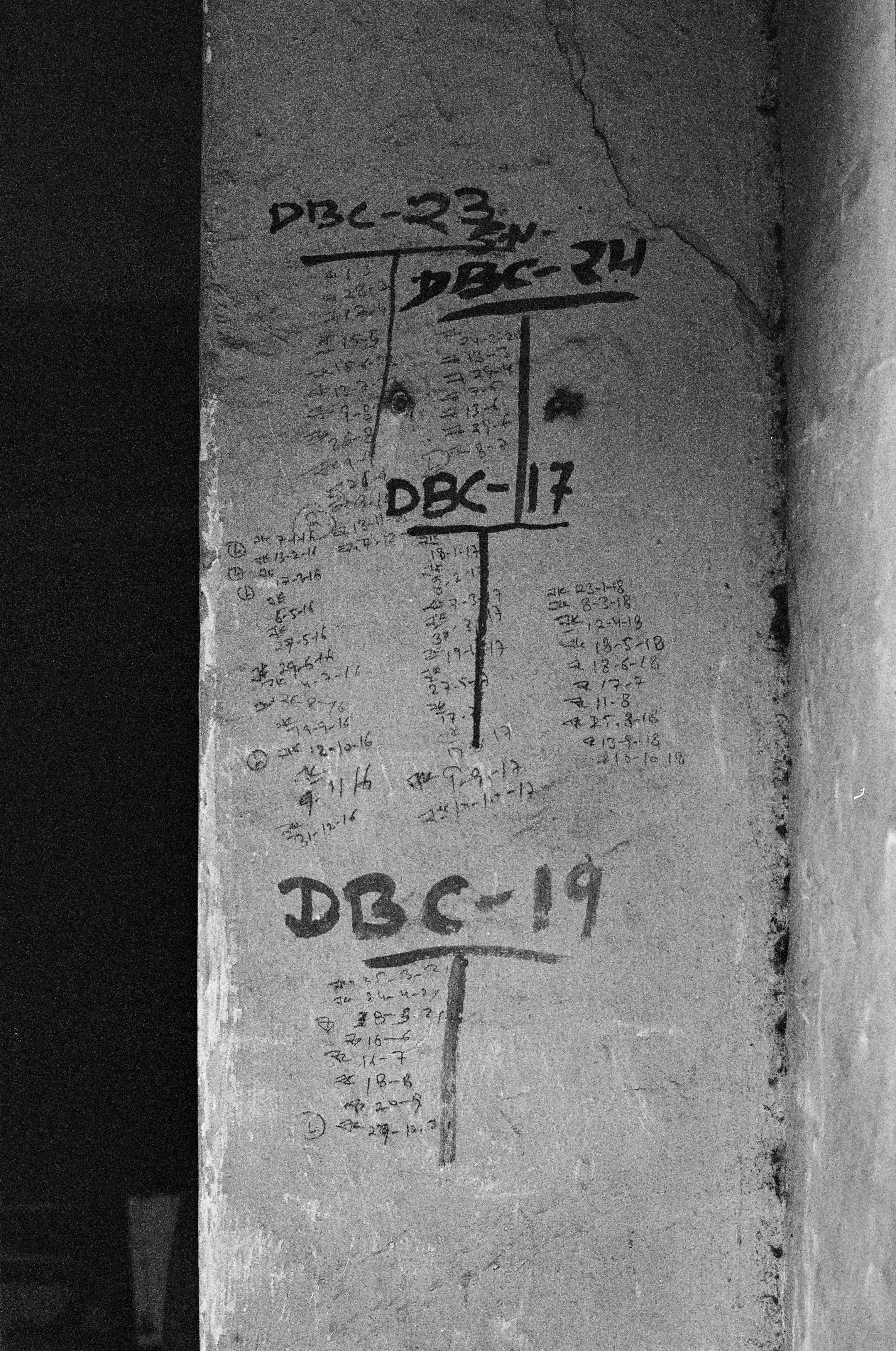
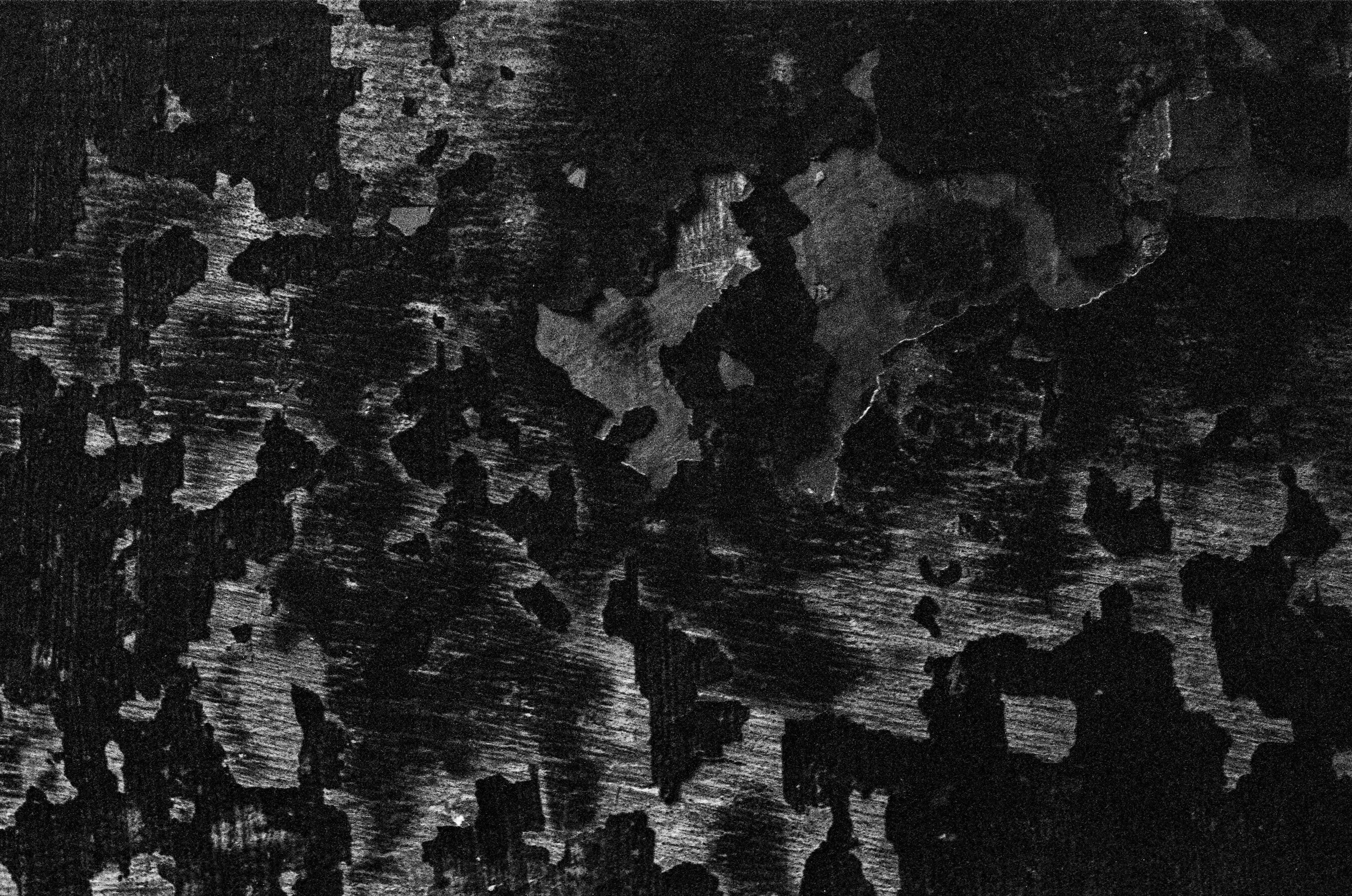
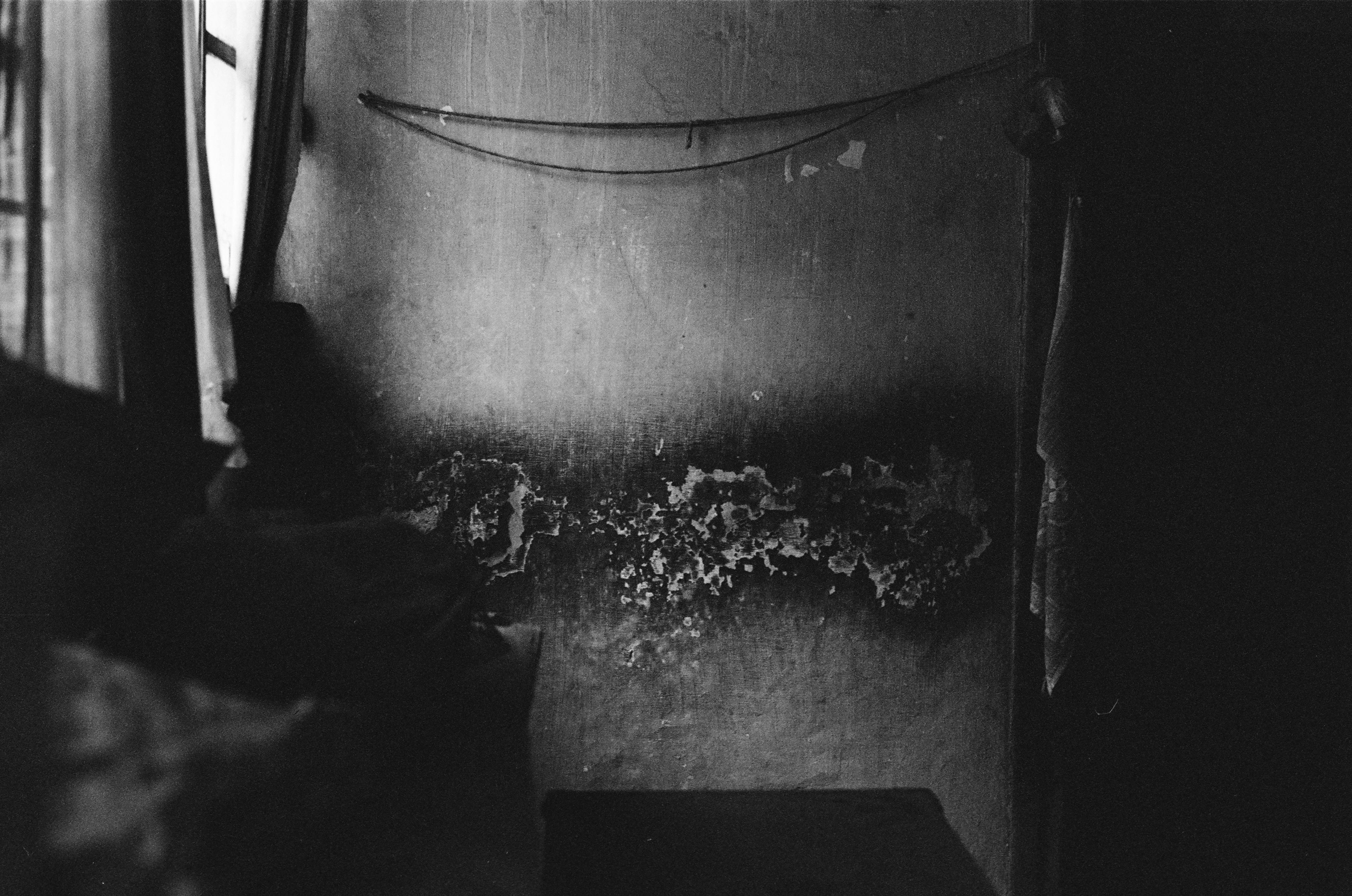
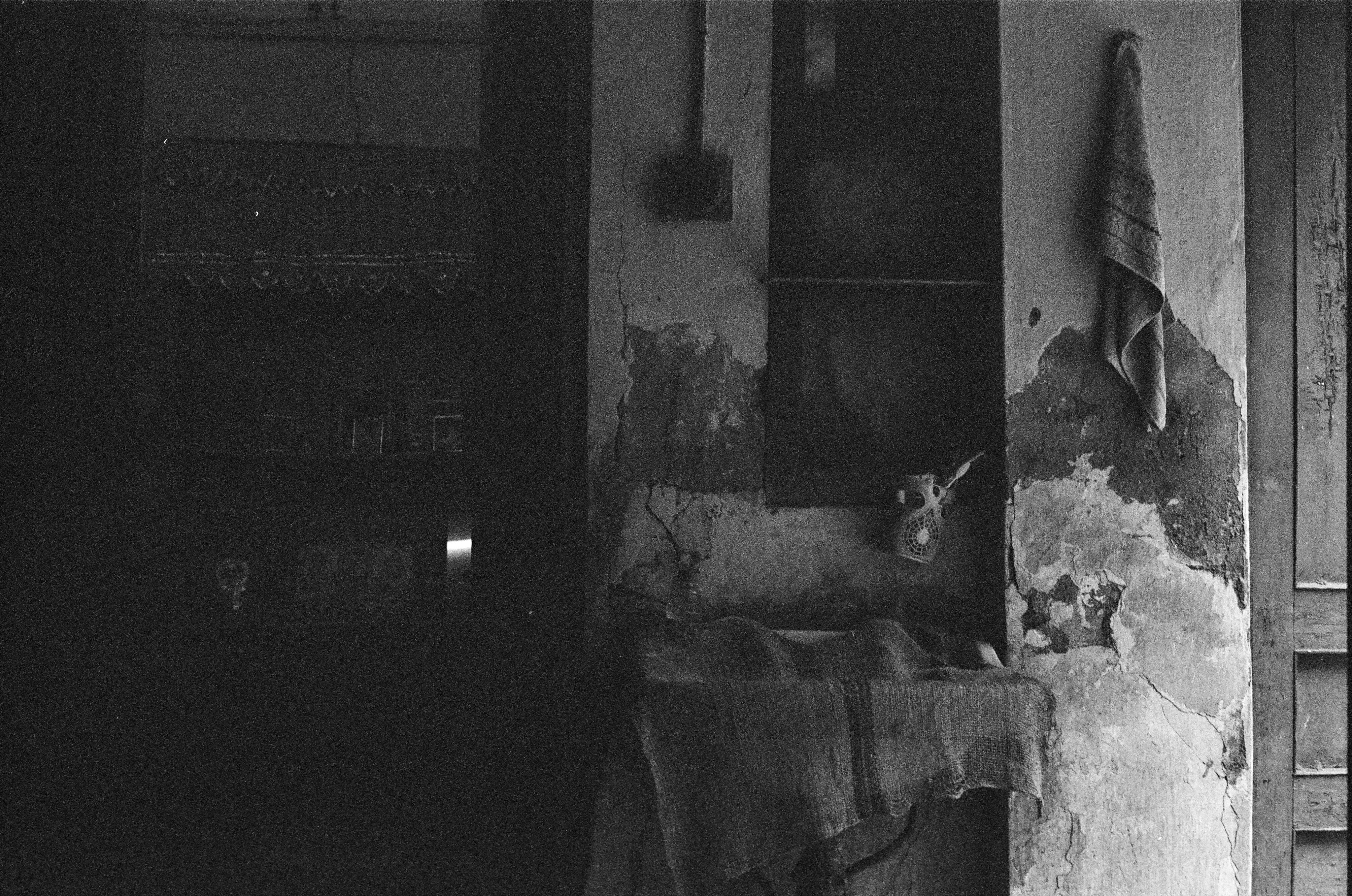
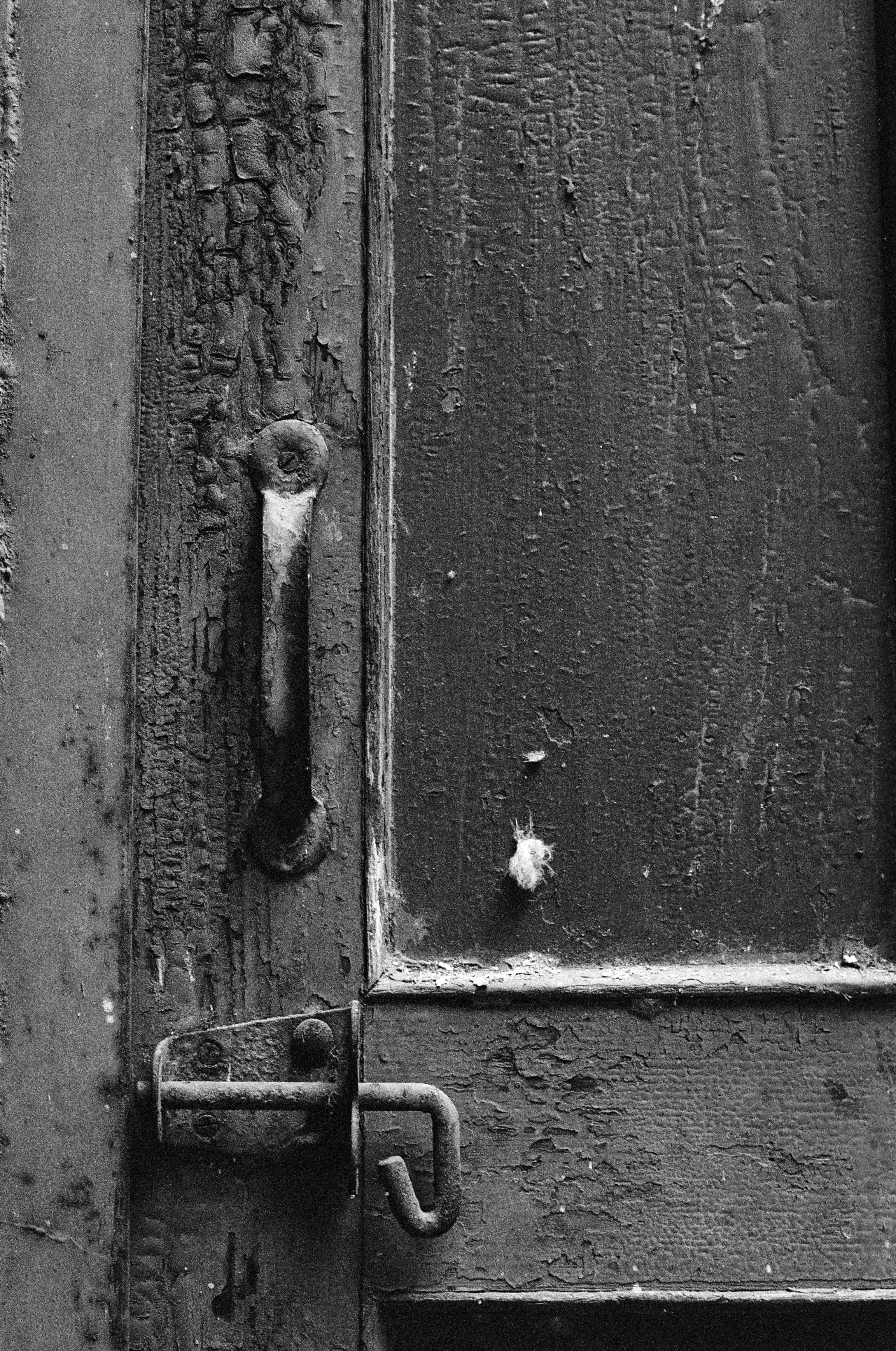
six by fifty-eight (2025)
Photographic film scans
'Every photograph is born in light.
6/58 (‘six by fifty-eight’) – the address of my family home in Delhi – inscribed much of my childhood and my concept of family. I’ve visited almost every year of my life since birth. After my grandfather’s passing, the house was abandoned as property rights became contested within the family.
In this photographic series, I was interested in the family home ‘after life’. After life, it remains in the torment of physical existence even when its inhabitants have left. It has been passed between legislative hands, yet its walls have not been traced by any hands in years.
The house is an image of perpetual purgatory; but it is also a fond image of life that once was. I used black-and-white photographic film to document this doubleness and to demonstrate light (and its absence) as texture. This texture can reveal and renew as much as it can reduce and brutalise. I wanted to show the tissue of the house decaying by capturing its quotidian details.
The house is dust, it is tarpaulin, it is rope, it is grease and cooking oil. It is light; it is darkness. Its skin is my history, it is my love.'
Naeema Nuramira
South College
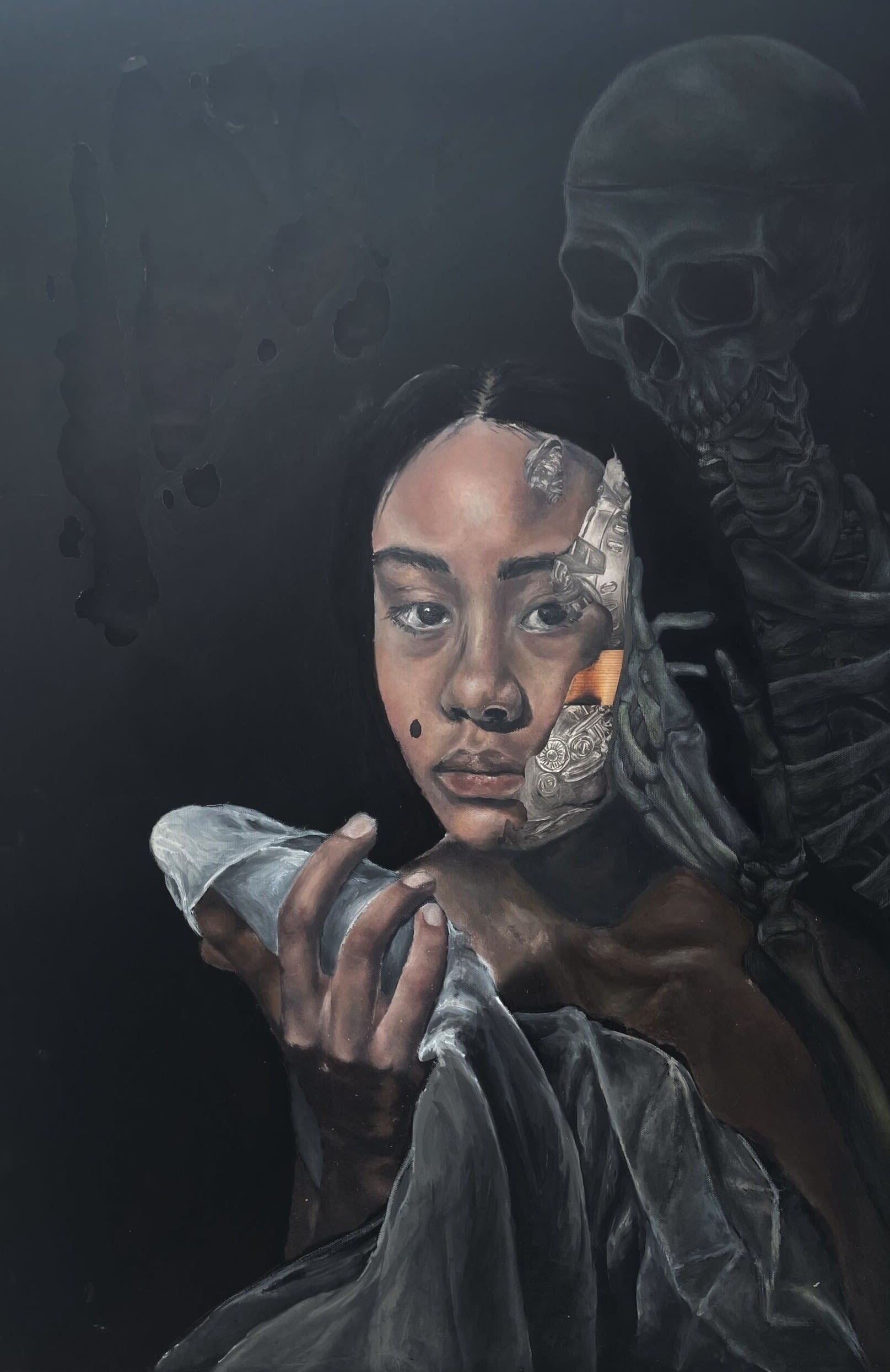
Resilience (2022)
Oil paint, colour pencil, graphite, and pouring medium (or flow acrylic) on canvas
'This piece explores transformation weighed down by the past. The contrast of light and darkness reveals both vulnerability and detachment, with mechanical features symbolizing a conflict between emotion and numbness, reflecting the notion that robots are devoid of feeling. The skeleton, whispering from the shadows, represents lingering regrets and self-doubt fuelled by the past. Burnt holes and torn skin expose hidden truths - pain and fears that can no longer be concealed. The white cloth, draped delicately over the subject, offers fleeting comfort - an attempt to shield oneself from past wounds.
Yet, its fragility suggests that protection is temporary, and true healing comes from facing what lies beneath. Meanwhile, the blood-like paint behind the burnt holes resembles scars - wounds from the past that never fully heal but remain an undeniable part of one’s identity. Despite the weight of the past, the light emerges through the darkness, hinting at growth and self-discovery. The question remains: will you be consumed by what once was, or will you use it to shape what is yet to come? The piece ultimately demonstrates the painful yet necessary process of confronting the past to step into the light of transformation.'

Naeema Nuramira
South College
Resilience (2022)
Oil paint, colour pencil, graphite, and pouring medium (or flow acrylic) on canvas
'This piece explores transformation weighed down by the past. The contrast of light and darkness reveals both vulnerability and detachment, with mechanical features symbolizing a conflict between emotion and numbness, reflecting the notion that robots are devoid of feeling. The skeleton, whispering from the shadows, represents lingering regrets and self-doubt fuelled by the past. Burnt holes and torn skin expose hidden truths - pain and fears that can no longer be concealed. The white cloth, draped delicately over the subject, offers fleeting comfort - an attempt to shield oneself from past wounds. Yet, its fragility suggests that protection is temporary, and true healing comes from facing what lies beneath. Meanwhile, the blood-like paint behind the burnt holes resembles scars - wounds from the past that never fully heal but remain an undeniable part of one’s identity.
Despite the weight of the past, the light emerges through the darkness, hinting at growth and self-discovery. The question remains: will you be consumed by what once was, or will you use it to shape what is yet to come? The piece ultimately demonstrates the painful yet necessary process of confronting the past to step into the light of transformation.'




 Built with Shorthand